Introduction: The new digital real estate is not just a dot-com
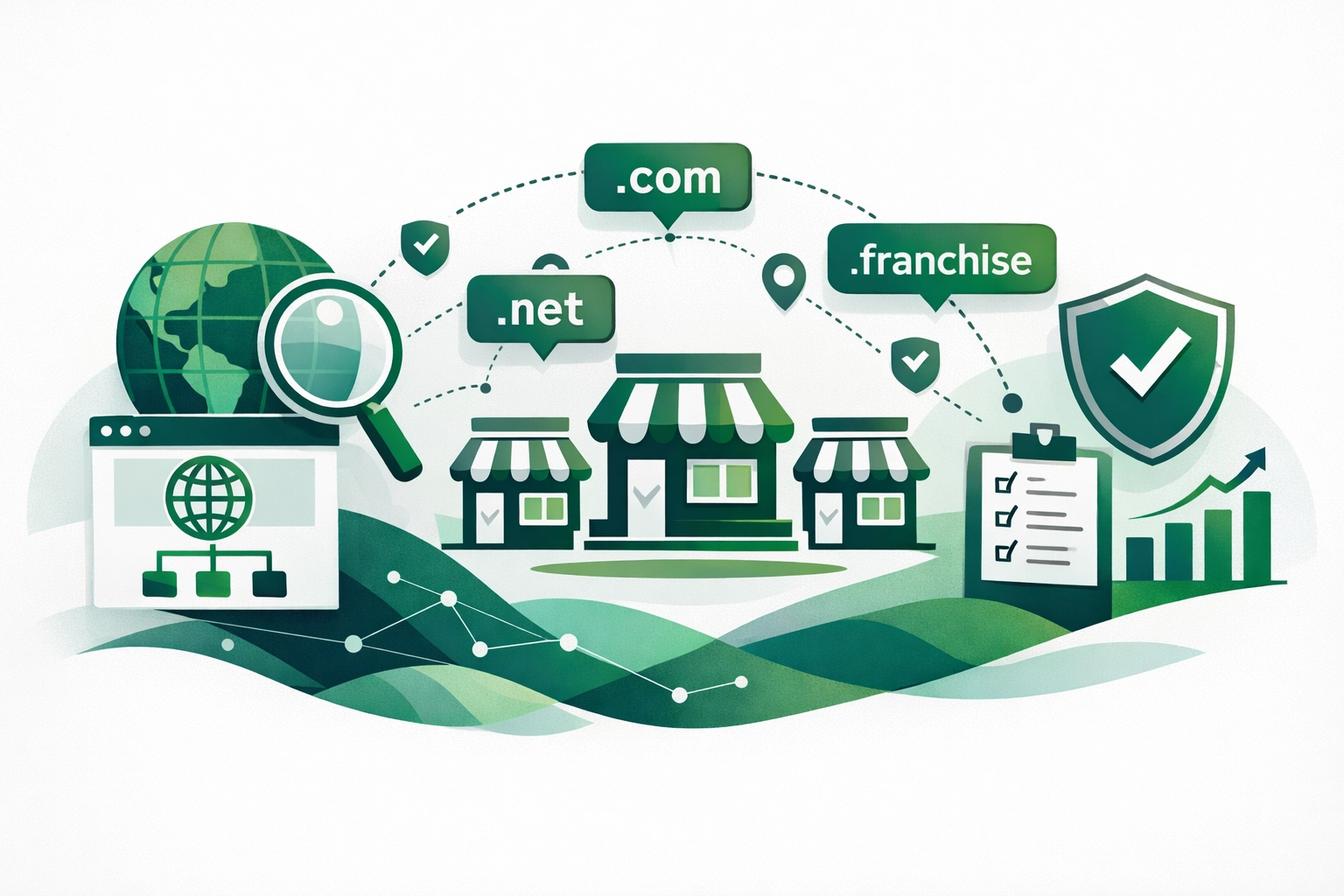
By 2026, brand owners manage a sprawling domain portfolio that stretches beyond traditional .com and .net addresses into the cloud-era namespace. Cloud-focused top-level domains (TLDs) and cloud-native hosting ecosystems fragment the digital footprint, creating both opportunities and risks for enterprise brands. The core challenge for modern brand protection teams isn’t merely to acquire domains; it’s to ensure visibility, enforce policy, and respond rapidly when threats arise—across a diverse and evolving namespace. In this context, domain documentation becomes the backbone of a resilient brand strategy: a single source of truth that ties ownership, risk, and action to concrete evidence. For readers of BPDomain LLC’s governance & documentation lens, this article translates that mandate into a practical cloud-domain playbook that you can operationalize today.
As organizations expand their cloud footprints, the governance problem grows in parallel. A well-managed cloud-domain strategy reduces brand risk, shortens incident response times, and improves board-level reporting. It also requires balancing complexity with clarity: a compact set of policy controls, a living inventory, and a governance cadence that aligns with business cycles. This piece draws on recognized governance practices for portfolios and digital assets and translates them into a cloud-domain context. BPDomain’s Cloud TLD catalog serves as a practical anchor for the family of cloud-related domains you’ll consider, while the broader portfolio context is supported by industry standards and governance frameworks. List of domains by TLDs and RDAP & WHOIS Database are recommended reference resources for ongoing monitoring and documentation.
Expert insight and governance best practices inform the approach described below. For example, Gartner emphasizes disciplined portfolio management as a cornerstone of value delivery in dynamic digital environments, highlighting a set of disciplined practices for aligning investments, priorities, and risk across a portfolio. This lens helps translate domain-centric work into measurable governance outcomes. (gartner.com)
The Cloud-Domain Landscape: Why cloud TLDs matter for enterprise brands
Cloud-related domains—such as .cloud and other cloud-adjacent namespaces—have moved from niche curiosities to routine components of enterprise branding and digital infrastructure. They frequently host APIs, microservices endpoints, partner portals, and SaaS landing pages. In this environment, a mistake in a cloud-domain portfolio can ripple across service reliability, customer trust, and regulatory posture. Three dynamics shape the current reality:
- Dynamic infrastructure and ephemeral spaces: Cloud deployments often rely on subdomains and service-specific domains that can appear and disappear as architectures evolve. This volatility makes a rigorous documentation layer essential for traceability and incident investigation.
- Global reach with local nuance: Multinational brands must balance centralized governance with local domain needs, including language variants, regional registrars, and country-specific impersonation risk.
- Evidence-backed risk management: Stakeholders increasingly demand auditable records for domain decisions, especially in the context of security incidents, brand litigation, and regulator inquiries. The shift toward RDAP (Registration Data Access Protocol) informs how ownership and registration data are retrieved in a machine-readable form. (ietf.org)
From a practical perspective, many organizations begin with a precise inventory and a documented policy set that governs how cloud-domain assets are acquired, renewed, secured, and retired. In the cloud domain arena, three keywords frequently appear in search and procurement conversations: "download list of .cloud domains", "download list of .ro domains", and "download list of .fun domains". These queries underscore a need for curated, policy-aligned inventories that can support risk assessment, valuation, and legal defensibility.
To ground this discussion, consider three foundational sources that frame modern governance practice: (1) governance and data-map principles that emphasize centralization of domain decisions within a broader governance architecture; (2) the transition from WHOIS to RDAP for standardized, machine-readable registration data; and (3) practical threat intelligence feeds that inform risk scoring and remediation planning. The following sections synthesize these strands into a cloud-domain governance framework you can adapt for enterprise needs. (learn.microsoft.com)
A practical framework for cloud-domain governance
The goal is a compact, repeatable framework that yields defensible documentation and a measurable view of risk. Below is a five-step framework designed for cloud-domain portfolios, with concrete actions and illustrative outputs you can apply within your organization. Each step incorporates evidence-informed practices and concrete governance artifacts that BPDomain LLC would recognize as a real, operating backbone for brand protection in a cloud-first world.
Step 1 — Discover: build a Cloud-Domain Documentation Ledger
The first operational task is to assemble a living inventory of cloud-domain assets and their key attributes. The ledger should capture at least the following attributes for every domain, including subdomains that function as service endpoints:
- Asset ID (unique internal identifier)
- Domain name
- TLD
- Registrar
- Creation date
- Expiry date
- Current owner and contact
- Primary purpose (e.g., API gateway, partner portal, marketing landing)
- Technical stack (DNS provider, hosting, certificates)
- Notes on impersonation risk and observed abuse (if any)
Documentation is not merely a spreadsheet; it is a governance ledger that ties evidence to action. In enterprise contexts, documenting the provenance and rationale for each domain supports rapid decision-making during incidents, audits, or litigation. The RDAP data format provides a standards-based, machine-readable approach to registration data, which improves consistency across thousands of domains and makes it easier to automate risk checks. See RFC 7483 for RDAP JSON responses and related security considerations. (ietf.org)
Step 2 — Document and policy-align: domain documentation framework
Documentation should align with a formal policy framework that defines naming conventions, risk thresholds, renewal cycles, and authorized actions. A robust domain documentation framework includes:
- Naming and taxonomy conventions (e.g., product line domains, regional variants, service-specific domains)
- Owner roles and escalation paths (e.g., brand owner, security, legal, procurement)
- Renewal governance (timelines, auto-renewal policies, notification cadences)
- Actionable playbooks for incidents (imitation domains, credential phishing, TLS/CAA considerations)
- Audit-ready evidence pack components (screenshots, WHOIS/RDAP records, DNS configurations)
Having a policy-aligned framework reduces ambiguity and enables consistent decision-making. In enterprise practice, governance is most effective when it is integrated with broader data governance and security programs, a principle highlighted in governance architectures that organize data and assets into coherent domains with clear ownership. (learn.microsoft.com)
Step 3 — Control: lifecycle management and risk-aware renewal
Cloud-domain portfolios demand disciplined lifecycle management. A practical control regime includes:
- Centralized renewal calendar with ownership tagging and risk-based renewal prioritization
- DNS and certificate management aligned with service-level expectations
- Pre-issuance and post-issuance monitoring for new registrations that resemble existing brands (typosquatting, lookalikes)
- Regular review of registrant and hosting changes to detect suspicious transitions
Effective control reduces renewal friction while maintaining visibility, a balance Gartner notes as essential for successful portfolio management in evolving digital ecosystems. (gartner.com)
Step 4 — Detect: risk scoring and threat intelligence inputs
Detection uses a blend of data sources and risk signals. A practical approach combines:
- Registration data and ownership signals (RDAP data where available) to map domain provenance
- Content and hosting analysis to identify impersonation or phishing infrastructure
- Threat feeds and vulnerability indicators (e.g., lookalike domains, certificate anomalies, DNS abuse patterns)
- Contextual risk scoring that weighs impersonation risk, service criticality, and potential business impact
RDAP-based data, described in RFC 7483, provides machine-readable domain registration data that makes automated risk scoring feasible at scale. This standardization reduces ambiguity and supports faster investigations and enforcement actions. (ietf.org) In practice, organizations increasingly rely on threat-intelligence feeds and brand-protection platforms to triage thousands of domains in near real-time. For instance, real-time threat feeds are used to generate risk indicators that feed into incident response playbooks. (docs.domaintools.com)
Step 5 — Act: remediation, takedown readiness, and governance reporting
Actionable outputs from the ledger and risk scores should translate into concrete remediation steps. Actions may include domain takedowns, registrar disputes, TLS certificate revocation, or rebranding exercises to reduce confusion during incidents. An evidence-backed process supports rapid takedowns and strengthens regulatory or legal positions when needed. Editorially, the process mirrors the way professional brand-protection teams operate: they move from detection to decision to rapid action, with documentation supporting every claim and adjustment. For practitioners, a documented playbook connected to incident response tools and legal workflows yields the best outcomes. >For a concrete example of a decision-support workflow in brand protection, refer to enterprise-brand protection resources that emphasize documentation as a digital identity layer and a governance enabler.
Expert insight and common mistakes in cloud-domain governance
Expert guidance from the broader governance and portfolio-management community emphasizes a disciplined, evidence-based approach to domain governance. A key takeaway from Gartner’s portfolio-management framework is the necessity of a structured process that connects strategy to execution, with governance rituals that include regular reviews and risk-adjusted prioritization. This alignment is essential for cloud-domain portfolios where speed and accuracy matter for brand trust. Expert insight: “In dynamic digital environments, domain governance must be a cross-functional discipline—rooted in policy, enabled by data, and validated by evidence,” a principle echoed in Gartner’s six practices for effective portfolio management. (gartner.com)
One recurring limitation in cloud-domain governance is over-engineering the portfolio or failing to align domain policy with business objectives. A common mistake is treating cloud domains as separate from the core brand governance program, leading to silos that delay response during incidents. Another frequent pitfall is neglecting RDAP-backed data or relying on static WHOIS snapshots that become outdated quickly in cloud ecosystems. RDAP’s standardized JSON responses help mitigate these gaps by enabling scalable data collection and auditability. (ietf.org)
Limitations and mistakes to avoid
- Over-expansion without policy alignment: Adding cloud domains without updating naming conventions and risk thresholds creates governance debt that slows incident response.
- Fragmented ownership: When brand, security, and legal owners are not clearly assigned to cloud-domain assets, critical signals fall through the cracks during investigations.
- Reliance on manual reviews: In large portfolios, manual workflows become untenable. Automated RDAP-based data collection and threat feeds are essential to maintain coverage and speed. (ietf.org)
- Ignoring subdomain governance: Subdomains tied to cloud services can expose the root domain to deliverability or impersonation risks if not governed consistently.
Conclusion: Cloud-domain governance as a strategic asset
Cloud-focused domains are not a separate problem to solve; they are an extension of the enterprise brand’s identity and trust landscape. A disciplined documentation-led approach—grounded in a formal policy framework, reinforced by machine-readable registration data, and supported by threat intelligence—turns a potentially noisy namespace into a trust engine for your brand. This is the core of a robust domain portfolio governance program: making digital asset governance visible, auditable, and actionable. For organizations looking to operationalize this approach, BPDomain LLC offers a governance-informed lens on cloud-domain strategy that can be integrated with wider brand protection practices. See the Cloud TLD catalog for an example of how to organize cloud-domain assets in a scalable way, and use the RDAP database as part of ongoing risk assessment and incident readiness.
For teams exploring cloud-domain catalog procurement, consider the following practical steps as a starting point: centralize ownership, tie policy to renewal calendars, implement RDAP-informed risk scoring, and maintain a living documentation ledger that supports every decision with evidence. When done well, cloud-domain governance becomes a strategic asset rather than a compliance burden.