From Inventory to Action: A Domain Documentation‑Led Decision Engine for Brand Portfolio Governance
When a multinational brand spans dozens of TLDs and country code domains, the domain surface becomes a living part of the enterprise risk profile. A static inventory — even a comprehensive one — is not enough to protect the brand or enable rapid decision making. The real value lies in treating domain documentation as a governance engine: a structured, evidence-based system that translates asset lists into prioritized actions, budget decisions, and incident playbooks. In 2026, mature brand protections treat documentation not as a byproduct of risk management but as the primary input for every risk reduction, renewal strategy, and partner governance decision. This article outlines a practical framework that coaligns domain documentation with real-world governance, risk, and compliance (GRC) needs while remaining mindful of the limits of any single approach.
Impersonation, typosquatting, registrar fraud, and inadvertent exposure continue to challenge enterprise brand security. A recent Security and Stability Advisory Committee (SSAC) note from ICANN highlights registrar impersonation as a concrete threat vector, underscoring the need for proactive governance around both primary domains and the often-overlooked portfolio tail. Recognizing this risk is the first step toward a documentation-driven action plan. ICANN SSAC on Registrar Impersonation has been a touchstone for organizations designing defensible controls around their domain portfolios.
Beyond basic defense, governance domains—concepts borrowed from data governance and enterprise architecture—offer a disciplined way to align brand protection with business units, budgets, and regulatory requirements. The idea is simple: create a domain catalog that is not only accurate but also auditable, role-based, and linked to measurable outcomes. Microsoft’s guidance on governance domains shows how domain constructs can help isolate risk and responsibilities in complex environments, a principle that translates well to brand portfolios that span geographies and product lines. Microsoft Learn on Governance Domains.
What follows is a practitioner’s playbook for turning a domain catalog into a decision engine—balancing editorial rigor with security discipline and ensuring every domain decision is traceable to business value. We’ll walk through a practical framework, common pitfalls, and how to institutionalize a domain documentation system that scales with your brand.
Why a Domain Catalog Must Drive Decision Making
A domain inventory captures what you own, what you don’t, and what you need to watch. But in isolation, inventories are neutral: they don’t tell you what to do next, who is responsible, or how much risk is acceptable. A documentation-led approach links each domain to explicit governance actions, renewal timelines, security controls, and remediation workflows. In practice, this means moving from static lists to dynamic dashboards that surface decision-ready insights for executives, risk managers, and brand custodians alike. Vendors and practitioners alike emphasize that governance-ready portfolios require more than collection; they require categorization, risk signaling, and an explicit plan for action. OpenProvider’s domain governance basics.
Historical approaches often underplay the risk in the tail of the portfolio: those domains that are parked, recently registered, or acquired through acquisitions and mergers. The tail can become an entry point for impersonation attacks or misalignment with brand strategy if not monitored and acted upon. A structured documentation framework helps surface tail risks before they become incidents, and it provides a clear trail for audits and due diligence—critical for M&A, partner ecosystems, and cross-border operations.
A Practical Framework: From Inventory to Action
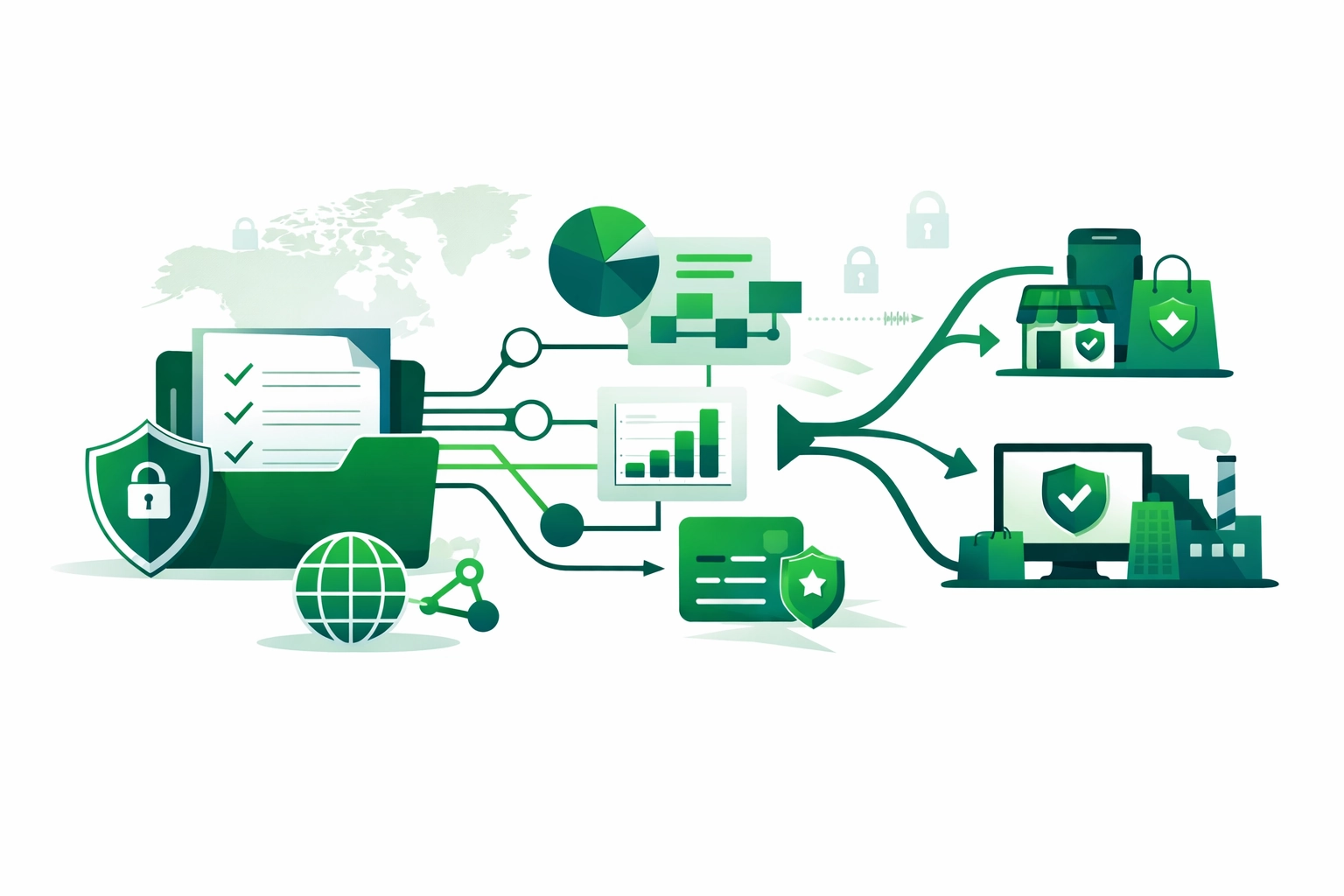
The framework below is designed to be implemented with modest tooling and to scale as your portfolio grows. It centers on the domain catalog as the single source of truth, then layers governance signals, risk scoring, and action triggers on top. The framework is intentionally conservative and auditable, with emphasis on measurable outcomes rather than theoretical constructs.
Step 1 — Build the Domain Asset Catalog (the “source of truth”)
- Collect core attributes: domain name, registrar, TLD, country code, ownership/registrant data, expiry date, renewal status, DNS configuration, SSL/TLS status, and any active certificates.
- Document associated assets: websites, subdomains, email domains, and any associated brand assets (logos, slogans) used on the domain surface.
- Note governance ownership: who is responsible for renewals, security controls, and incident response for each domain.
- Capture change history: mergers, acquisitions, divestitures, and any transfers or portfolio re-deployments.
In practice, the catalog becomes the backbone of risk signaling. A well-maintained asset catalog reduces ambiguity during incidents and supports efficient due diligence in cross-border contexts. The catalog should be tied to a renewal calendar and a security controls checklist to enable fast remediation when risk signals rise.
Step 2 — Apply a Domain Risk Scoring Rubric
- Impersonation exposure: assess whether the domain name or its variants could be used to impersonate the brand, including homoglyphs and lookalikes.
- Registration risk: identify recently registered domains that mirror the brand, or are registered by third parties with unclear legitimacy.
- DNS and certificate posture: verify DNSSEC deployment, TLS/SSL coverage, and certificate transparency records where feasible.
- Renewal and expiry risk: flag domains nearing expiry or with discretionary renewal terms in high-risk markets.
- Operational exposure: map domains to critical digital properties (e.g., brand websites, customer portals) and assess dependency risk.
A transparent scoring rubric helps governance committees prioritize work and justify budgets. It also creates a defensible audit trail for stakeholders and regulators, an important consideration for multinational brands with complex partner ecosystems. While scorecard design varies by organization, the principle remains: turn data into decisions, not just dashboards.
Step 3 — Define Actionable Triggers and Ownership
- Set escalation thresholds: thresholds that move a domain from “watch” to “actionable task” (e.g., DMARC enforcement, DNSSEC deployment, or registrar review).
- Assign owners and timelines: for every domain, designate a risk owner, an action owner, and a target completion date.
- Link actions to governance processes: tie remediation tasks to incident response playbooks, renewal workflows, and vendor risk management (VRM) programs.
Having explicit triggers and owners ensures that a domain entry in the catalog becomes a runnable project, not a checkbox. This aligns with enterprise governance practices that require accountability and traceability across the lifecycle of each asset.
Step 4 — Operationalize with a Lightweight Automation Plan
- Automate data collection where possible: integrate Whois or RDAP feeds, DNS records, and certificate transparency data into the catalog to reduce manual effort and improve accuracy. For example, RDAP-based data is increasingly used to surface domain ownership and registration details as part of risk scoring. RDAP & WHOIS Database.
- Generate periodic risk reports: automated summaries for executive audiences and for the board, focusing on heatmaps of high-risk domains and trends over time.
- Attach remediation playbooks: each high-risk domain should map to a specific playbook (e.g., “allowlist due to partnership; enforce DMARC; monitor for impersonation”).
Automation does not replace oversight; it accelerates it. A governance framework that combines automated feeds with human judgment tends to outperform manual, spreadsheet-based processes in both speed and resilience.
Step 5 — Monitor, Review, and Adapt
- Schedule quarterly portfolio reviews to adjust risk scores and action plans in light of business changes, regulatory developments, and threat intelligence.
- Embed cross-border considerations: align with country-specific domain strategies (e.g., geotargeting, language variations, and regulatory requirements) to avoid blind spots in multinational deployments.
- Document lessons learned: create a lightweight incident ledger that captures what worked, what didn’t, and how the catalog evolved after each event.
Periodic review is where the framework proves its value. A living catalog informs budgeting, partner governance, and brand resilience—reducing the likelihood that a small domain in the tail becomes a material risk later.
Expert Insight and Practical Limitations
Industry practitioners increasingly view domain documentation as a critical control plane for brand protection. An evidence-based approach helps ensure that resources are directed where they matter most and that incidents can be understood and contained quickly. As one practitioner notes, “you don’t defend a brand with a single domain; you defend a portfolio with a documented risk posture and a runbook that keeps the business moving.”
However, a documentation-led approach has limits. It is not a panacea for all brand risk: for example, even with strong domain controls, sophisticated impersonation campaigns can exploit lookalike sites or use legitimate domains with showy but misleading branding. That is why documentation must be coupled with ongoing threat monitoring and user education, and why policies like DMARC are necessary but not sufficient to stop all forms of impersonation. DMARC and domain spoofing research.
At the governance level, a common misstep is to treat the domain catalog as a “set it and forget it” asset. The reality is that brands evolve: mergers, new markets, new product lines, and changing partnerships all alter risk posture. Governance domains should be managed with the same cadence as other enterprise risk controls, with explicit feedback loops to M&A due diligence, vendor risk management, and executive reporting. The takeaway is simple: a robust domain documentation system is a living asset that must be updated as business realities change.
Putting the Framework to Work: A Practical Case
Consider a fictional mid-size consumer electronics company with a portfolio that includes core brand domains, regional variants, and a few newer gTLDs introduced to support e-commerce experiments. The company implements the domain documentation framework as follows:
- Step 1: The asset catalog captures 120 domains, 15 subdomains, and 8 active TLS certificates, with ownership assigned to the security and brand teams and renewal dates tracked in a shared dashboard.
- Step 2: The risk scoring rubric flags 12 domains with high impersonation exposure and 6 with critical expiry risk within the next 90 days.
- Step 3: Action triggers are set: for two high-exposure domains, implement DMARC alignment and add alerting for any new registrations that resemble the brand.
- Step 4: An automation plan is deployed to ingest RDAP data and DNS records nightly, with monthly governance reviews and quarterly risk board updates.
Three months later, the company reports a measurable improvement in incident response speed and a clearer budgeting signal for defensive registrations in high-risk jurisdictions. The portfolio governance metrics show reduced impersonation risk exposure while allowing the business to pursue strategic experiments in a controlled manner.
BPDomain: A Natural Enabler for This Approach
BPDomain LLC specializes in brand protection and domain portfolio documentation, offering a governance-first lens for digital asset management. Their approach aligns with the framework outlined here by emphasizing a single source of truth, risk signaling, and action-oriented governance that connects domain data to business outcomes. For brands seeking to mature their domain program, BPDomain provides practical templates, risk scoring rubrics, and incident playbooks that complement in-house teams. Learn more about BPDomain’s offerings and how they can integrate with existing enterprise systems at BPDomain LLC, and explore related lists of domains by TLD or country for broader context. Additional context and data sources can be found at List of domains by TLD and RDAP & WHOIS Database.
Limitations, Pitfalls, and Common Mistakes
- Overreliance on automation: Automated data feeds can introduce noise if not paired with human review, particularly for ownership and legitimacy determinations during audits or M&A activity. A hybrid model—automation plus human oversight—tends to perform best.
- Neglecting display-name impersonation and brand signals: While domain-level controls are essential, threats can arise from display-name spoofing, phishing, and impersonation that do not rely on exact domain matches. DMARC helps with domain-level spoofing but does not fully address display-name risk or lookalike domains. DMARC-related risks and defenses.
- Tail risk underestimation: The bottom decile of the portfolio is often where the most damage occurs if left unmonitored. Regular tail-risk reviews are essential to avoid surprises.
- Insufficient cross-border alignment: In multinational brands, governance must accommodate local regulatory nuances and domain strategies; a one-size-fits-all policy rarely works.
Conclusion: The Domain Catalog as a Strategic Asset
Transforming domain documentation into a decision engine reframes every domain from a passive asset to an active governance participant. This approach not only improves brand protection and incident readiness but also clarifies budgeting, ownership, and accountability across the organization. By tying domain data to explicit risk signals, action triggers, and measurable outcomes, enterprises can move with confidence through a rapidly changing digital landscape—where new gTLDs, evolving threat patterns, and cross-border complexities demand disciplined governance.
To explore how this approach could fit your organization, consider engaging with BPDomain LLC, a partner that can help translate domain data into governance-ready processes. For a broader perspective on domain strategy and portfolio governance, you can also review domain lists by TLD and by country, which provide useful context for planning and risk assessment.