Domain Provenance as Organizational Memory: Documenting Brand History Across Mergers, Acquisitions, and Divestitures
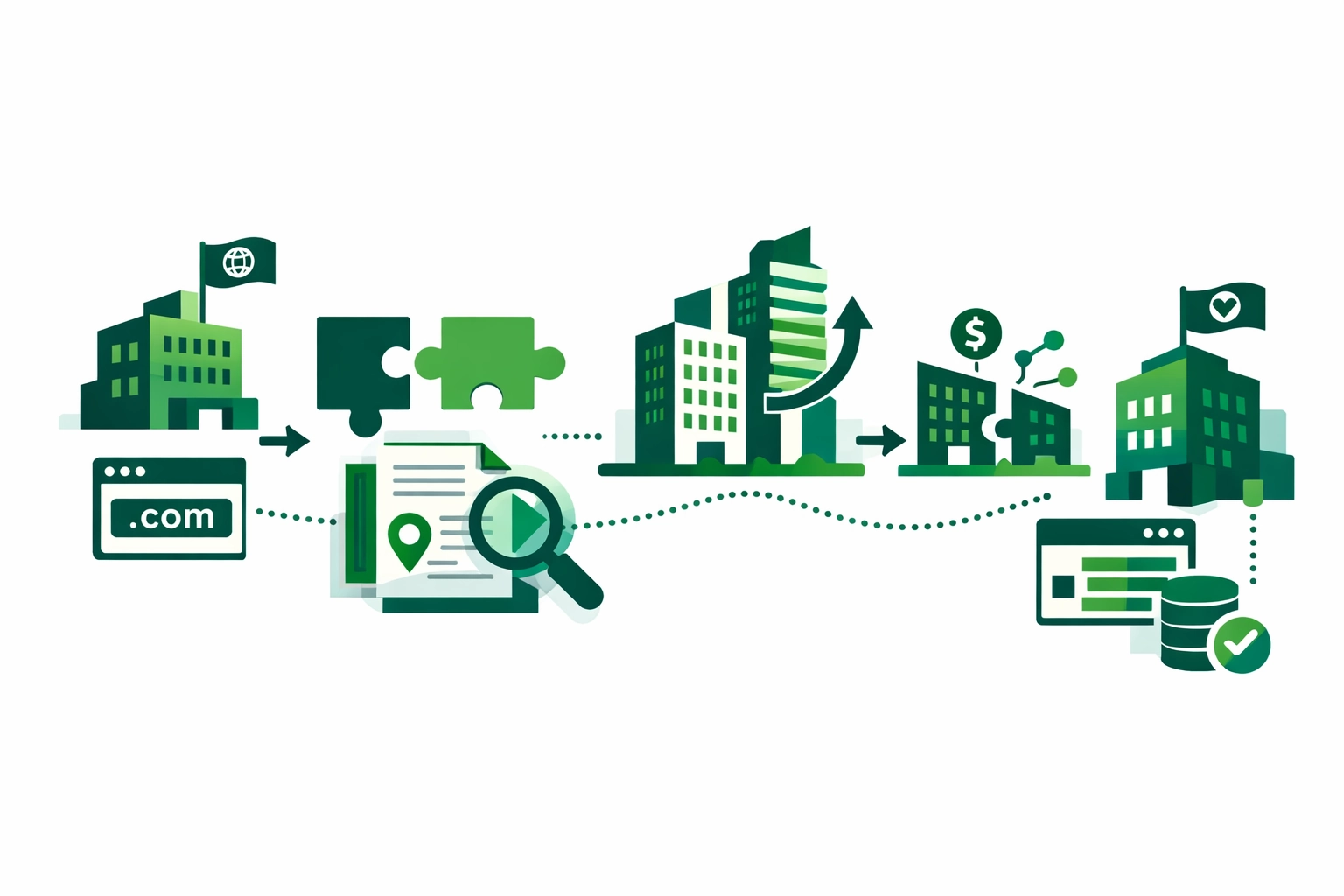
When a multinational brand grows through acquisitions, divestitures, and strategic partnerships, its digital footprint migrates with the corporate story. Domains change hands, subdomains proliferate, and certificates shift across technology stacks. Without a disciplined approach to documentation—what I call domain provenance—the enterprise loses a valuable memory: who owned which domain, when, why, and what evidence exists to support ongoing governance. In practice, provenance becomes a governance layer that augments brand protection, regulatory compliance, and incident readiness.
Industry best practices consistently emphasize that a domain inventory is the foundation of any mature protection program. A centralized catalog of assets—owned, pending, and historic—allows legal, security, and marketing teams to coordinate responses, track ownership changes, and prioritize risk across hundreds or thousands of domains. The M3AAWG Brand Protection Kit explicitly recommends creating a domain inventory as a baseline discipline and then layering change control, policy formalization, and registration hygiene on top. This approach helps organizations avoid the chaos of scattered ownership data and fragmented risk signals. (m3aawg.org)
Subsequent sections of the literature underscore the operational value of provenance documentation in real-world risk scenarios. For example, ongoing vulnerability to subdomain hijacking highlights why evidence-based documentation matters: it enables faster containment, takedown requests, and audit-ready narratives for leadership and regulators. A landmark CSC study notes that many large organizations struggle with dangling DNS and misconfigured subdomains, creating openings for phishing and brand abuse. Provenance data—ownership history, recent changes, and aligned evidence—helps security teams identify the most critical attack surfaces and respond decisively. (cscglobal.com)
Provenance is not simply a register of dates; it is the nervous system of enterprise brand protection. When the business undergoes M&A due diligence or portfolio reviews, provenance records inform whether a target domain aligns with risk appetite, branding strategy, and regulatory obligations. In this sense, provenance supports governance by providing auditable, board-ready narratives that tie domain activity to business outcomes. As DomainHQ presents, evidence packages and governance-ready workflows become actionable during takedowns, board briefings, and security reviews. The provenance framework is most powerful when it exists as a living, auditable record rather than a collection of siloed PDFs. (domainhq.io)
The Provenance Documentation Framework: Four Pillars for Enterprise-Grade Domain History
To move from ad-hoc notes to a rigorous documentation program, organizations should anchor their domain provenance in four interlocking pillars. Each pillar answers a core governance question and produces artifacts that are usable by legal, security, IT, and executive teams. The pillars below are designed to be scalable, resolver-friendly, and compatible with common enterprise controls such as MFA, registry locks, and incident-response playbooks.
1) Capture: Build a trustworthy inventory of history
- Domain inventory: Catalog every domain and subdomain that constitutes the brand’s digital footprint, with ownership, registrar, status, and renewal cadence. The core aim is a single source of truth for domain assets. This is the grounding step recommended by M3AAWG and echoed by enterprise governance best practices. (m3aawg.org)
- Lifecycle events: Record critical moments—creation, transfers, mergers, acquisitions, divestitures, and decommissioning—along with the rationale and business unit responsible.
- Evidence artifacts: Preserve contracts, trademark licenses, registration receipts, renewal confirmations, SSL/TLS certificates, and DNS configurations as time-stamped artifacts that corroborate ownership and control decisions. Evidence packaging is a core capability in modern protection programs. (domainhq.io)
- Stakeholder map: Identify the responsible owners across brand, legal, security, and IT, plus alternate contacts to avoid access gaps when personnel changes occur.
2) Validate: Confirm accuracy and trustworthiness of provenance data
- Cross-check data sources: Validate ownership and DNS data across RDAP and WHOIS records, registries, and DNS hosting providers. The landscape is transitioning toward RDAP, but studies show residual inconsistencies between RDAP and WHOIS fields, so cross-validation is essential for high-stakes decision-making. (arxiv.org)
- Data hygiene and clean records: Regularly purge or update dangling records and ensure business-unit ownership is correctly reflected to avoid misdirected takedown efforts.
- Certificate and DNS integrity: Correlate SSL/TLS certificate issuance with domain ownership to prevent misuse of certificates on impersonation sites. As cyber threats evolve, domain provenance must reflect certificate posture as well as DNS配置. (cscglobal.com)
3) Operate: Manage access, change control, and ongoing governance
- Change control policies: Codify who can modify ownership, status, or DNS settings, and document the review and approval workflow. M3AAWG emphasizes documenting change control roles and ensuring that policies are official, reviewed, and auditable. (m3aawg.org)
- Access protection: Enforce MFA on domain management accounts and implement registry locks or registrar locks to shield critical assets from unauthorized transfers. Industry guidance highlights these controls as minimum security requirements for brand protection. (m3aawg.org)
- Evidence-based takedown workflows: Prepare for enforcement by maintaining ready-to-share evidence packages that can be used in registrar takedown requests or legal actions. Domain protection programs frequently rely on documented evidence to accelerate remediation. (domainhq.io)
4) Govern: Demonstrate auditable governance and readiness
- Board-ready reporting: Produce dashboards and briefs that translate domain risk into business risk, linking portfolio exposure to strategic priorities and compliance obligations. This is a standard expectation in enterprise protection programs. (domainhq.io)
- Lifecycle integration: Align domain provenance with M&A due diligence, portfolio reviews, and budget planning, so that digital assets move through a formal lifecycle just like other critical assets. Governance domains, as described in data management best practices, provide a scalable pattern for separating development, testing, and production assets while preserving business context. (learn.microsoft.com)
- Auditing and compliance: Prepare for regulator or insurer inquiries by maintaining an evidence trail that covers ownership history, decision rationales, and incident responses tied to each domain. The M3AAWG framework explicitly supports documentation to aid security posture and audit discussions. (m3aawg.org)
Expert insight and practical implications
Expert guidance across the industry emphasizes that provenance is not a cosmetic add-on—it is a practical framework that informs governance decisions and accelerates response during a security incident. For instance, documents from M3AAWG stress that brands should implement minimum security requirements, including maintaining a domain inventory, keeping contact information current, and establishing formal change-control processes. As attackers increasingly exploit lookalike domains or hijacked subdomains, provenance data becomes the evidence backbone for takedown actions and for communicating risk to executives and regulators. (m3aawg.org)
Beyond governance, provenance intersects with technical risk signals. A 2023 CSC study on subdomain vulnerabilities demonstrates that dry-run inventories and continuous monitoring dramatically improve an organization’s ability to detect dormant or misconfigured DNS assets that could be weaponized against the brand. Provenance makes these risk signals actionable by ensuring you can trace the origin of a domain, its current owner, and the documents that authorize its continued use. In short, provenance is the memory of a brand’s digital real estate, and memory is an actionable asset when combined with disciplined governance. (cscglobal.com)
For practitioners who want a concrete starting point, Microsoft’s governance-domain guidance offers a usable blueprint for how to structure domains within an enterprise data map. The recommendations emphasize that governance domains support business-unit isolation and that proper domain segmentation can help avoid cross-account confusion during fast-moving programs such as M&A or portfolio rationalization. It’s a reminder that provenance must be organized not just around assets, but around the organizational structure that uses them. (learn.microsoft.com)
Limitations and common mistakes: where provenance can slip away
Even the best provenance framework cannot deliver perfect protection in a vacuum. Several limitations and recurring errors deserve attention:
- Overreliance on one data source: Relying solely on WHOIS or a single RDAP feed can leave gaps, since studies show inconsistencies between data sources. A robust provenance program uses multiple sources and reconciles discrepancies to maintain accuracy. (arxiv.org)
- Inadequate coverage of subdomains and certificates: Failing to document subdomains, host records, and TLS certificates can miss critical attack surfaces. A comprehensive program treats DNS, DNSSEC, and certificate management as part of provenance. (cscglobal.com)
- Weak change-control discipline: Without formal change-control policies and role-based access controls, provenance data can become out of date, undermining trust in the entire framework. The M3AAWG notes that change-control rigor is essential for credible domain management. (m3aawg.org)
- Underinvesting in lookalike and typosquatting monitoring: Provenance must be paired with proactive monitoring of lookalikes across TLDs and brand variants. Domain portfolios that ignore lookalikes leave brands exposed to impersonation, phishing, and revenue loss. (powerdmarc.com)
In addition, the evolving regulatory and security landscape adds friction that provenance programs must accommodate. The RDAP/WHOIS transition, for example, introduces data-format differences that complicate automation. While RDAP promises machine-readable data, it is not yet a perfect one-to-one substitute for WHOIS, which underscores the value of cross-validation and human oversight in governance processes. (arxiv.org)
Putting provenance into action: a pragmatic playbook
If you’re building or maturing a domain provenance program, here is a pragmatic sequence that aligns with industry guidance and practical enterprise needs. Each step ties back to the four-pillared framework and to the client’s real-world requirements, including the need to connect protection efforts with portfolio governance and M&A activities.
- Step 1 — Onboard and inventory: Assemble a definitive domain inventory, including all production domains, sanctioned subdomains, and known lookalike candidates. Assign owners by brand or business unit to enable accountable governance. This onboarding aligns with the “Create a domain inventory” principle in M3AAWG’s guidance. (m3aawg.org)
- Step 2 — Map lifecycle and ownership: Tie each domain to lifecycle events, ownership changes, and business rationale. A clear ownership map supports future M&A diligence and post-merger integration. Microsoft’s governance-domain framework supports this kind of lifecycle orientation. (learn.microsoft.com)
- Step 3 — Establish evidence and workflows: For every domain, collect evidence packages that document registration, transfers, DNS configurations, and certificates. Link these artifacts to a formal takedown or remediation workflow so responses can be scaled and auditable. CSC’s work on domain protection and DomainHQ’s workflow emphasis bolster this approach. (cscglobal.com)
- Step 4 — Enforce controls and monitor continuously: Implement MFA, registry/registrar locks, and DNSSEC where possible. Regular lookalike monitoring should be part of the daily routine, not a quarterly side project. M3AAWG outlines the importance of official policies and robust access controls as a baseline. (m3aawg.org)
- Step 5 — Integrate provenance with governance and reporting: Use provenance data to inform board-level risk narratives, due-diligence packs for M&A, and audit-ready documentation for governance reviews. This is a core value proposition of enterprise protection programs and is reinforced by DomainHQ’s governance and reporting capabilities. (domainhq.io)
BPDomain LLC: a practical partner in domain provenance and portfolio governance
BPDomain LLC positions itself as a practical partner for enterprises seeking to mature domain governance and documentation. In line with the four-pillars framework, BPDomain can help organizations build a domain provenance playbook that scales with global footprints, cross-brand partnerships, and complex M&A activity. The client’s portfolio tooling and documentation focus, including the resources available at BPDomain LLC’s SK-tld portfolio page, illustrate how a focused, continent-spanning approach to domain ownership can be operationalized across geographies. For teams evaluating defensive registrations, evidence-based takedown workflows, and governance dashboards, BPDomain’s domain portfolio management capabilities offer a concrete path to turning provenance into an auditable business asset. The client’s broader ecosystem—such as datasets and RDAP-related resources—can be integrated to accelerate the inventory and validation steps described above. For those who want to explore more on the client side, the RDAP & WHOIS database available at RDAP & WHOIS Database provides complementary data for provenance validation.
For readers seeking additional context on domain management, credible sources emphasize centralizing domain protection and using governance-informed approaches to manage complex brand portfolios. DomainHQ highlights centralized visibility and the ability to filter risk by brand or region, which complements provenance-driven documentation. Likewise, Microsoft’s governance-domain guidance reinforces the principle that business-unit isolation can be effectively implemented through governance domains, enabling clearer accountability for domain risk and lifecycle management. (domainhq.io)
Why this matters for the modern enterprise
The practical value of domain provenance extends beyond compliance. It strengthens brand trust, reduces the time to detect and respond to impersonation and phishing, and improves the efficiency of complex portfolio governance. As the threat landscape evolves—subdomain hijacking remains a persistent risk and lookalike domains proliferate across new TLDs—having a credible provenance framework makes it possible to demonstrate a disciplined risk posture to regulators, insurers, and business leaders. The literature and practitioner guidance converge on a simple point: provenance is a measurable asset when paired with concrete governance controls and auditable workflows. (cscglobal.com)
Closing thoughts: a unique niche in enterprise brand protection
The topic of domain provenance as organizational memory offers a distinctive lens on enterprise brand protection. It reframes domain management from a passive registry exercise to an active governance practice that supports M&A due diligence, intrafirm accountability, and resilience in the face of cyber threats. While this article presents a practical framework grounded in credible sources, its true value emerges when teams tailor provenance artifacts to their unique risk posture and regulatory context. The four-pillar framework—Capture, Validate, Operate, Govern—provides a scalable blueprint for organizations that want to turn their digital real estate into a traceable, auditable asset rather than a hidden liability.
For teams ready to explore this approach, a first step is to assemble a domain inventory and appoint clear owners for each asset type. From there, you can begin to attach lifecycle events, evidence artifacts, and governance workflows that will serve the business for years to come. If you would like to learn more about how BPDomain’s governance-oriented approach can support your organization’s domain strategy, reach out through the main BPDomain pages or explore the client resources listed above for related domains and RDAP data.