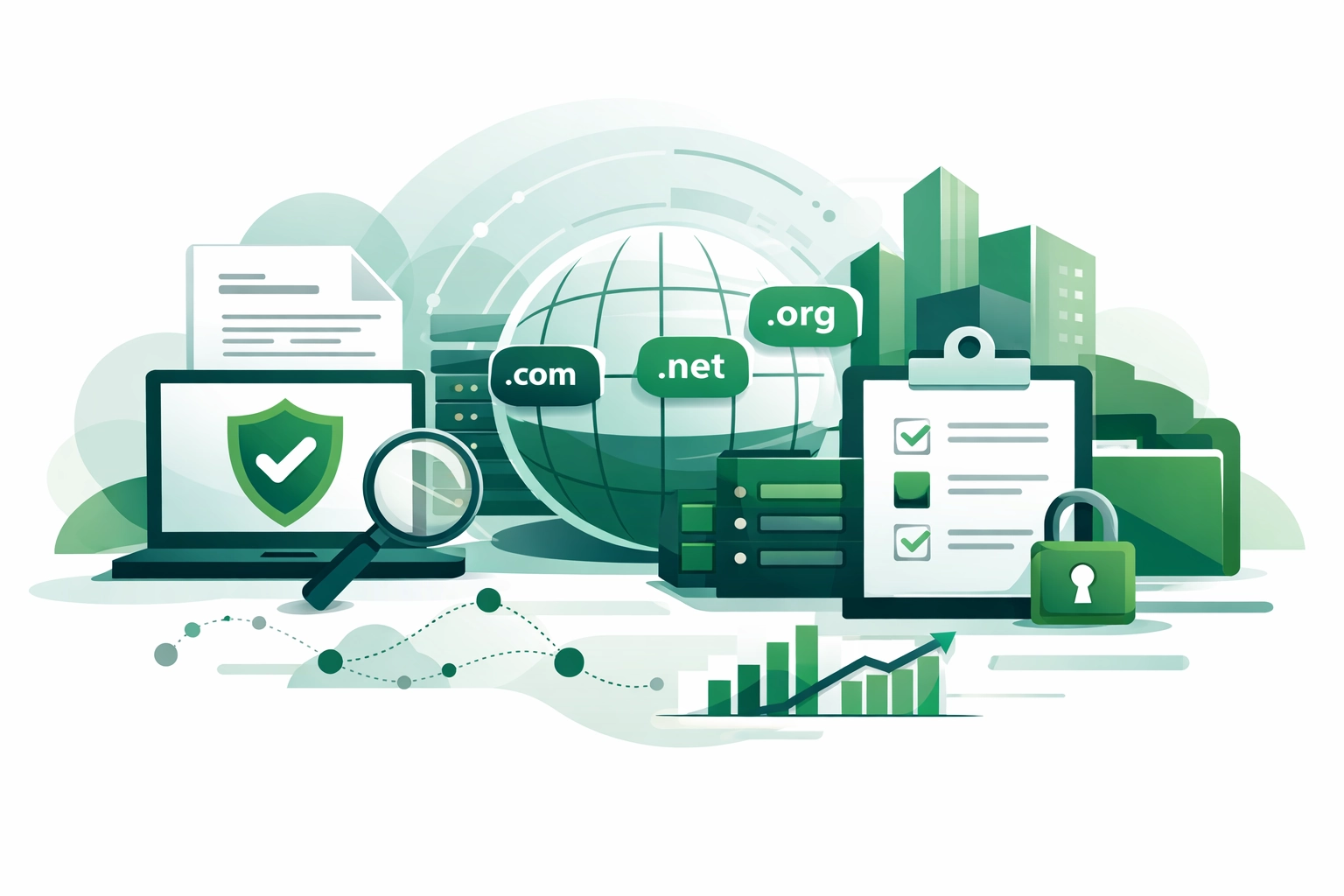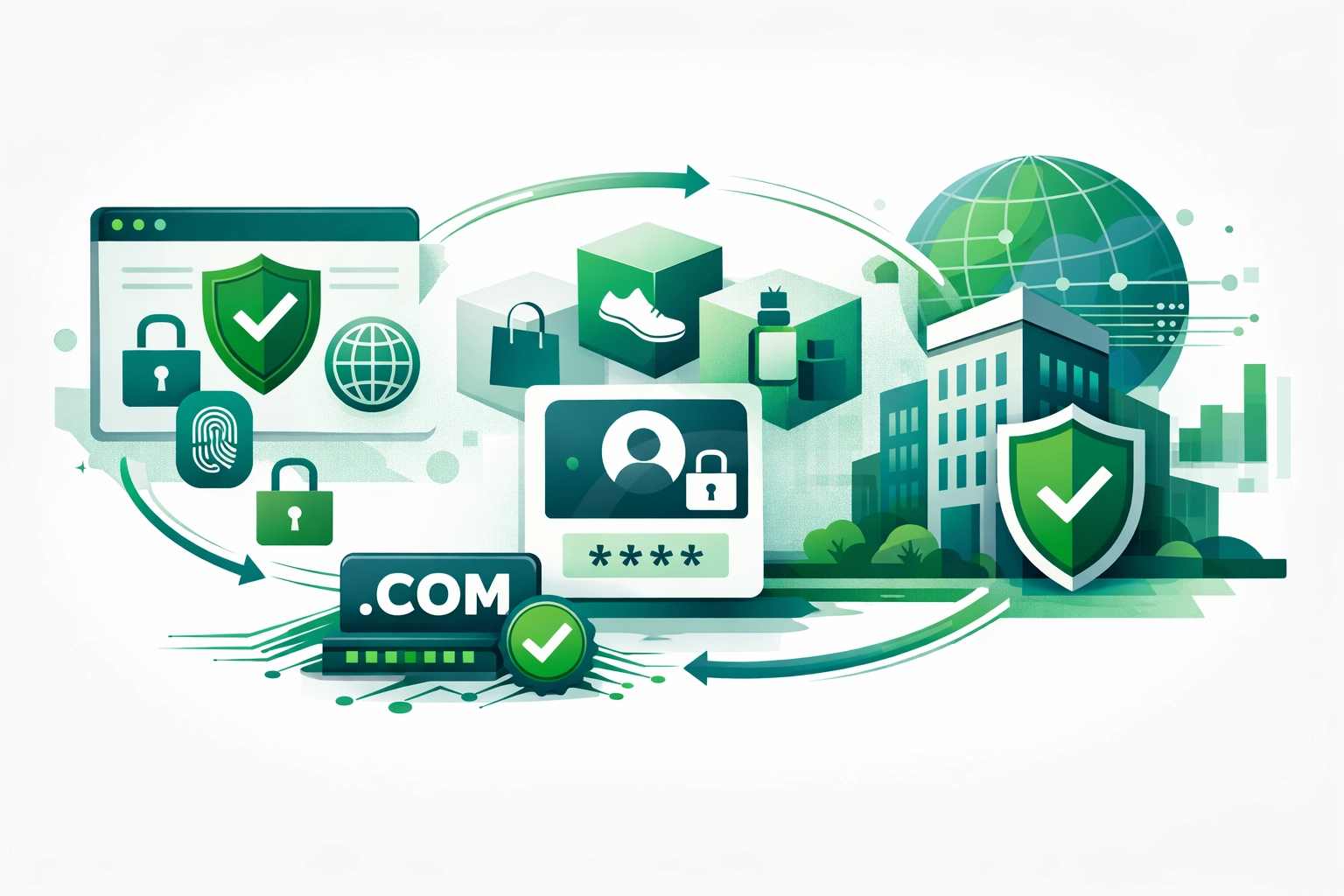
In large organizations, a domain portfolio is more than a ledger of URLs—it's a living layer of brand identity, customer trust, and regulatory responsibility. Yet most enterprises run their portfolios with disparate records: spreadsheets here, onboarding notes there, scattered registrar emails, and silos of security alerts. The result is a fragile view of the brand’s digital assets that hampers risk management, complicates audit trails, and slows growth initiatives. The antidote is a change‑aware Domain Provenance framework: a structured, auditable record of every domain asset, its ownership history, lifecycle events, governance decisions, and compliance metadata. This article outlines why provenance matters, what to capture, and how to implement a scalable system that supports governance, security, and strategic decision‑making.
The Case for Domain Provenance in Enterprise Brand Protection
Brand protection today requires more than detecting squatted or cybergang domains. It demands traceability—being able to demonstrate who owned a domain, when ownership changed hands, which registrar was used, and how data privacy rules affected access to registration records. Provenance makes it possible to answer questions like: Was a domain transferred under unusual timing? Was privacy masking used to obscure a critical asset? Do we have a reliable chain of custody for a portfolio that could be involved in a legal dispute or M&A due diligence?
Registration data standards are evolving. The Registration Data Access Protocol (RDAP) is increasingly viewed as the standardized, queryable source of domain information—particularly as public WHOIS data becomes restricted in many jurisdictions. RDAP offers structured data that supports provenance workflows, change detection, and integration with security and compliance tooling. For enterprises, this means more reliable signals about ownership, creation, expiration, and transfer events that underpin governance and risk assessments. RDAP is the backbone of transparent provenance, and its adoption is accelerating across gTLDs. (sidn.nl)
At the same time, privacy protections around WHOIS data are changing the accessibility of registrant details. When registries redact or limit contact information, brands must rely on additional signals and documented processes to maintain a current view of their digital footprint. This shift elevates the value of a formal provenance record that captures the full lifecycle of each asset, not just the latest registrant contact. Industry thinking emphasizes that relying solely on public WHOIS is insufficient for mature brand protection and compliance programs. Privacy‑managed data must be complemented by provenance signals and governance records. That is not a theoretical concern—privacy restrictions have real operational consequences for brand teams and legal/compliance functions. (faegredrinker.com)
The Domain Provenance Model (DPM): What to Capture
A robust provenance model is practical, not ornamental. It should describe both static attributes of a domain asset and dynamic events that change its governance posture over time. Below is a compact blueprint you can adapt to your enterprise context. The model is designed to be extensible, so you can incorporate new data sources as regulatory or operational needs evolve.
- Core asset attributes
- Asset ID (unique, auditable identifier)
- Primary domain, subdomains, and related TLDs
- Current owner/organization and legal entity
- Registrar and registrant status (privacy protections in place or not)
- Creation date, last updated date, expiration date
- Registration data source (RDAP vs WHOIS, registrar API, etc.)
- DNS configuration snapshot (nameservers, DNSSEC status)
- SSL/TLS certificate state (issuer, validity window, revocation status)
- Lifecycle events
- Ownership changes (who, when, rationale)
- Transfers between registrars (dates, authorization, costs)
- Expiration management events (renewal window, auto‑renew status)
- Policy decisions (privacy shielding, lock status, registrant contact changes)
- Usage signals (redirects, subdomain deployments, brand pages)
- Legal actions or trademark triggers (claims, negotations, court orders)
- Compliance and governance signals
- Privacy regime impacting access to data (GDPR, CCPA, etc.)
- Data retention and deletion policies for domain data
- Audit trail timestamping and data integrity checks
- Links to related brand assets (logos, taglines, campaigns) where applicable
- Data quality and reliability indicators
- Confidence score for each data field
- Source reliability (RDAP primary, registrar API secondary)
- Propagated changes (latency, resolution time between updates)
To keep the model practical, map each data element to a data source and define ownership for updates. For example, an Ownership History field captures who had control of a domain and when, sourced from RDAP “entity” fields when available or registrar‑provided records otherwise. A Lifecycle Event entry should include an event type, timestamp, and justification so audits can reconstruct decisions during a legal inquiry or regulator review.
Data Sources and Reliability: RDAP, WHOIS, and Beyond
The provenance picture is only as good as its data sources. RDAP provides structured, machine‑readable data that supports programmatic checks, anomaly detection, and automation in governance workflows. As RDAP becomes more widespread and, in some cases, mandatory for gTLDs, it becomes a more reliable backbone for asset history than legacy, unstructured WHOIS records. Enterprises should design their provenance pipelines to ingest RDAP data wherever available, with careful handling of gaps when privacy protections or data redaction apply. RDAP’s standardized data model enhances provenance reliability and interoperability across internal systems and external partners.
However, even with RDAP, data quality challenges persist. Registry operators and registrars can differ in update cadence, and cross‑domain propagation delays may create short windows of incomplete information. In addition, privacy redaction policies limit visibility into registrant details, which can obscure part of the ownership trail. In practice, mature programs supplement RDAP/WHOIS signals with registrar contact policies, certificate intelligence, DNS change logs, and explicit governance records maintained in a dedicated domain provenance repository. This multi‑source approach reduces blind spots and strengthens due diligence capabilities. Privacy protection is a reality, not a fad; provenance systems must adapt to this reality rather than rely on a single open data stream. (iana.org)
From Data to Action: Practical Use Cases
A disciplined provenance record unlocks actionable workflows across several domains of enterprise risk and growth. Here are representative use cases where a Domain Provenance framework demonstrates value.
- M&A due diligence: A complete ownership and transfer history helps buyers and sellers establish asset integrity, identify hidden risks such as pending transfers or unreported ownership changes, and accelerate integration planning.
- Legal risk and enforcement: Clear provenance trails improve the enforceability of trademark and brand‑misuse actions by providing auditable evidence of domain lineage and control transitions.
- Regulatory compliance: Privacy regimes require careful handling of personal data. Provenance records document data flows, retention policies, and access controls for domain data used in audits.
- Incident response and breach containment: When a domain is compromised or used in phishing campaigns, a proven lineage accelerates investigation, containment, and recovery, including coordinated takedowns with registrars and hosting providers.
- Strategic portfolio governance: Governance boards can evaluate domain risk exposures, renewal strategies, and diversification across TLDs and geographies with confidence that each asset has a documented history.
BPDomain LLC’s services align with these use cases by offering structured domain documentation that complements ongoing brand protection activities. For teams seeking a rigorous, auditable framework, BPDomain’s RDAP & WHOIS database tooling provides a practical source of governance signals that feed into the Domain Provenance Model. Learn more about BPDomain’s offerings here: BPDomain Domain Documentation Toolkit and BPDomain RDAP & WHOIS Database.
A Practical Blueprint: The Domain Provenance Framework (DPF)
Translate the model into a repeatable process that scales with portfolio size and regulatory pressure. The Domain Provenance Framework (DPF) combines data engineering, policy governance, and stakeholder engagement to deliver a resilient, auditable asset view. The following five‑step flow is designed for large, evolving portfolios.
- Discover — Create a baseline inventory by aggregating data from RDAP, registrar APIs, certificate registries, and DNS change logs. Consider bootstrapping with public lists (for example, a “download list of .com domains” for initial scoping) and then automating ongoing ingestion.
- Normalize — Standardize field names, units, and timestamps. Resolve inconsistencies between sources (e.g., different time zones, date formats, or policy‑driven redactions) and attach source metadata to each field.
- Record — Persist provenance data in a centralized repository with immutable event logs. Each asset entry should bind core attributes to a timeline of lifecycle events and governance decisions.
- Validate — Implement data quality checks, cross‑source reconciliation, and anomaly detection. Flag gaps (e.g., missing RDAP updates after a transfer) and route to owners for remediation.
- Use — Deliver targeted reports for governance, security, and legal teams. Create automated alerts for expiration, unusual ownership changes, or policy violations. Integrate with incident response playbooks and board dashboards.
As a practical matter, the framework should accommodate privacy constraints. In cases where registrant data is redacted, provenance workflows should emphasize non‑personal data signals (ownership patterns, registrar activity, DNS/SSL states) and maintain documented escalation paths to obtain critical information when legally warranted. This balanced approach aligns with policy developments around data access while preserving the ability to govern and protect the brand.
Expert Insight and Practical Limitations
Industry observers note that robust provenance reduces uncertainty in brand protection programs and accelerates decision‑making during complex events. An informed view is that RDAP, as a standardized data source, improves data reliability and interoperability across internal systems and external partners. However, even the most mature provenance systems confront limitations: data latency between events, incomplete historical records, and privacy protections that obscure registrant details. In practice, you should design your workflow around best available signals and explicit governance policies for data gaps, rather than assuming perfect visibility.
In line with this perspective, a recent overview of RDAP adoption highlights that the move toward RDAP data and the push for open, auditable repositories are critical for enterprise brand protection. Enterprises should treat RDAP as a core data source, complemented by additional signals and governance records to close gaps created by privacy protections. RDAP adoption and governance alignment are central to reliable brand provenance. (sidn.nl)
Limitations and Common Mistakes in Domain Provenance Programs
- Relying on a single data source — Even RDAP can miss records due to privacy settings or propagation delays. A multi‑source approach with explicit data source provenance reduces blind spots.
- Ignoring governance during data collection — Without defined ownership and update cadences, provenance records quickly drift out of sync with reality.
- Underestimating privacy constraints — Privacy protections are here to stay in many jurisdictions. Failing to plan for masked data undermines the completeness of the historical trail.
- Inadequate retention of event history — Shortened retention periods for domain data impede investigations and post‑mortem analyses after incidents or disputes.
- Weak change management processes — Proactive governance requires structured approvals and audit trails for every modification to asset data or lifecycle events.
These pitfalls are well documented in industry discussions around domain data governance and the evolving role of RDAP and privacy rules. For brand teams, they translate into concrete practices: diversify data inputs, codify ownership for updates, and maintain an auditable changelog that survives organizational transitions and regulatory reviews.
A Concrete, Actionable Checklist
- Define a Domain Provenance owner and committee for governance decisions.
- Establish a centralized provenance repository with immutable event logs and source tagging.
- Ingest RDAP data wherever available; supplement with registrar API data and DNS/SSL signals.
- Implement data quality checks, including cross‑source reconciliation and timestamp normalization.
- Document privacy handling rules and escalation paths for obtaining redacted information when legally required.
- Link provenance records to related brand assets, campaigns, and trademark data where appropriate.
- Automate alerts for expiration, ownership changes, or policy violations.
- Regularly test incident response playbooks using provenance data as a core input.
- Periodically review and refresh data sources to reflect regulatory and market changes.
Conclusion: A Proactive Posture for Enterprise Brand Protection
A mature Domain Provenance framework turns domain assets from passive records into a defensible, auditable backbone for enterprise governance. By combining a disciplined data model with multi‑source data ingestion, standardized protocols like RDAP, and explicit privacy‑aware governance, organizations can manage risk, accelerate growth initiatives, and demonstrate readiness to regulators, investors, and partners. For teams seeking to operationalize this approach, BPDomain LLC offers practical tooling and services that align with the Domain Provenance Framework, helping organizations transform domain documentation from a compliance burden into a strategic capability. Explore BPDomain’s resources for a structured, change‑aware approach to domain governance and documentation.
To learn more about practical domain documentation and data coverage, consult BPDomain’s resources: BPDomain Domain Documentation Toolkit and BPDomain RDAP & WHOIS Database.