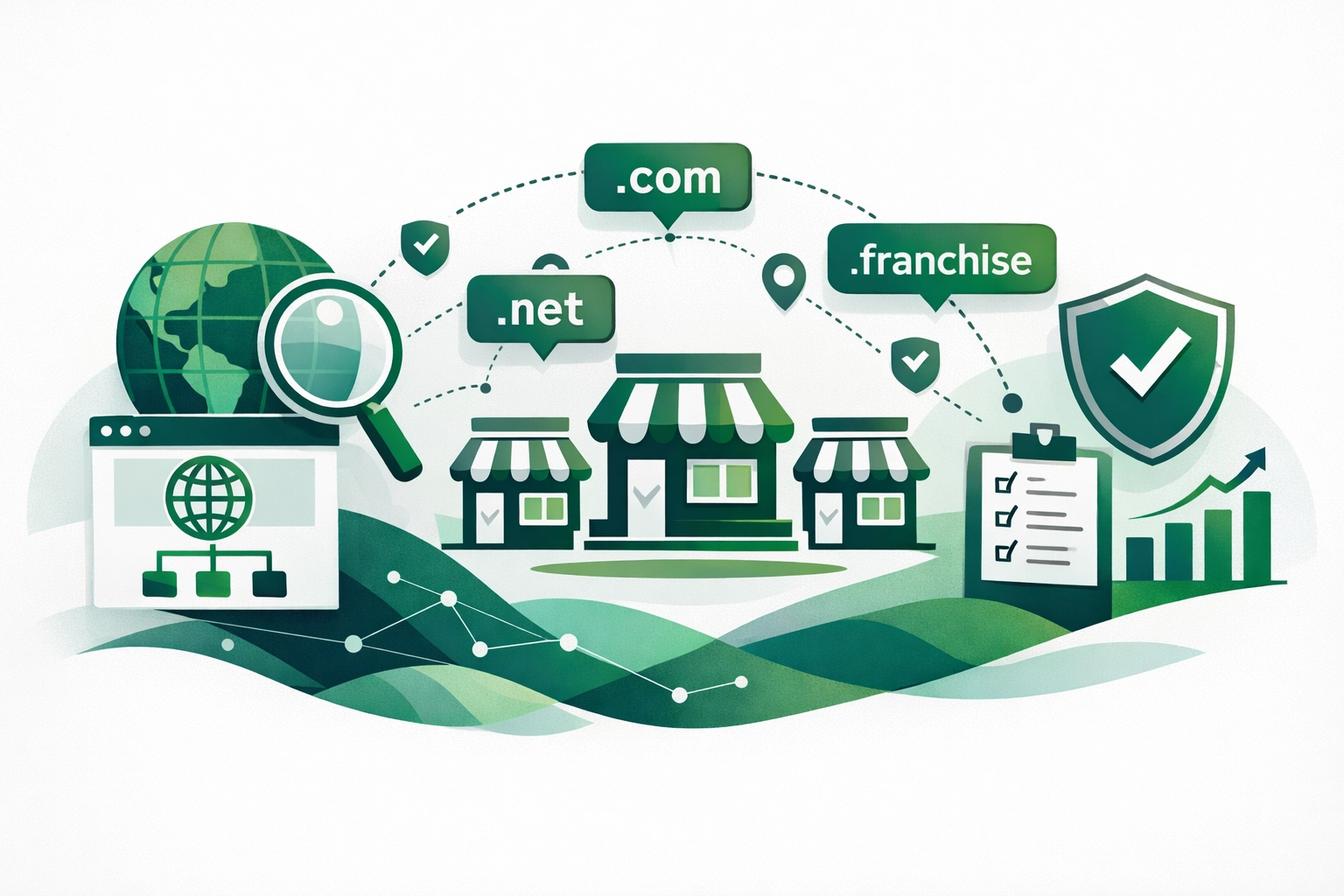
When a brand expands through a franchise network, the digital footprint expands with it in ways that are both predictable and complex. Corporate domains, partner domains, geo-local pages, and campaign microsites must all align with the brand’s identity while adapting to local markets. Without a deliberate, taxonomy-driven approach to domain governance, brand equity can drift, confusion can arise among customers, and risk surfaces multiply across jurisdictions. This article presents a niche but practical approach: a taxonomy-driven framework to govern shared brand domains across a franchise ecosystem, anchored by a living documentation strategy and aligned with enterprise risk management. The idea is to move beyond generic domain lists and toward an intentional, scalable structure that clarifies ownership, naming, and accountability for every digital asset tied to the brand.
Evidence from brand-protection practice shows that external threats like typosquatting and brand impersonation can exploit weak or poorly coordinated domain portfolios. Industry analyses highlight how attackers exploit misspellings and brand similarities to capture traffic and credibility. A disciplined taxonomy helps reduce such risk by ensuring each domain has a clearly defined owner, purpose, and lifecycle stage, and by making it easier to detect anomalies or misaligned assets across the network. While public research on typosquatting and phishing indicates the ongoing relevance of domain-based risk, the governance lens—especially in franchise networks—remains underexplored in practical playbooks. (zscaler.com)
The Franchise Domain Strategy Challenge
Franchise systems must juggle several realities at once: a centralized brand that must stay visually and verbally consistent; multiple partner entities with some degree of autonomy; and a global reach that includes markets with different regulatory and consumer expectations. The result is a layered portfolio of domains that can include corporate domains, partner domains, geo-targeted pages, and co-branded storefronts. The challenge is not only to protect the brand but also to maximize local discoverability and conversion, while keeping governance scalable as the network grows.
Industry commentary emphasizes that brand protection is not simply about registering defensive domains. It is about building an auditable, risk-aware infrastructure that can support rapid decision-making across geographies and partners. typosquatting and brand impersonation continue to be meaningful risks for even large brands, underscoring the need for proactive measures that go beyond incident response. A taxonomy-based approach provides a common language for brand teams, franchisees, legal, and IT/security to collaborate effectively. (zscaler.com)
A Taxonomy-Driven Framework: Domain Types, Ownership, and Purpose
The core idea is to classify every domain in the portfolio into a small set of well-defined types, each with explicit ownership, purpose, and lifecycle rules. The taxonomy should be treated as a living framework that evolves with the brand and the network. Below is a compact framework you can adapt. It is designed to be implemented without requiring a complete architectural overhaul of existing systems.
- Domain Type — the high-level category of the domain in the brand ecosystem.
- Corporate-owned domains (brand.com, corporate campaigns)
- Franchise-partner domains (each partner or master franchise operates under a sub-portfolio)
- Geo-local domains (city, region, or country variants)
- Campaign/Microsites (seasonal campaigns, product launches, co-branding events)
- Marketplace/partner aggregations (brand-centric listings or co-branded portals)
- Ownership Model — who controls content, security, and lifecycle decisions.
- Corporate owner: centralized publishing and policy enforcement
- Partner owner: content responsibility and local compliance with HQ policy
- Shared registry: defined responsibilities for specific domains under collaboration agreements
- Naming Conventions — standardized prefixes, suffixes, and domain patterns that convey purpose and ownership unambiguously.
- Global: brand-country or brand-region naming (brand.example.us)
- Local: city-name or franchise-area qualifiers (brand.city.example)
- Campaign: campaign-year or event tags (brand.sale2026.example)
- Lifecycle & Compliance — how domains are created, renewed, migrated, or retired, with governance checkpoints.
- Creation: require approval, alignment with branding guidelines
- Maintenance: monitored renewals, security controls (2FA, registrar locks)
- Retirement: decommissioning with archival documentation
- SEO & User Experience Impact — how domains affect discoverability, conversion, and trust, including localization considerations.
- Consistent canonical strategies across franchise domains
- Clear navigation from local pages to corporate hubs
This taxonomy creates a shared mental model across teams and geographies, enabling consistent governance without suffocating local autonomy. It also supports risk management by ensuring ownership mappings and lifecycle policies are explicit rather than implicit. The result is a governance fabric that can scale with the franchise network while maintaining brand integrity. For a practical take on how to operationalize this, consider a domain registry that references each domain by its taxonomy-encoded attributes and a change-control workflow that requires cross-functional approvals before any change in ownership or purpose is executed. The practical payoff is faster decision-making during campaigns, faster remediation during threats, and clearer audit trails for regulators or partnering franchisees.
Operationalizing the Taxonomy: From Theory to Practice
Implementing a taxonomy-driven model requires deliberate processes and tooling, but you can start with a lightweight, iterative approach. The following steps outline a pragmatic path to rollout that respects existing investments while delivering measurable governance benefits.
1) Map the Portfolio to the Taxonomy
Begin with a living inventory of all domains tied to the franchise ecosystem. Tag each with the taxonomy attributes: Domain Type, Ownership Model, Naming Pattern, Lifecycle Stage, and Regulatory considerations. A frequent blind spot is treating all domains as equal—where a geo-local page might be critical for local SEO, a legacy campaign domain could be at risk of confusion if not retired properly. A disciplined mapping helps identify gaps in ownership or outdated domains that should be retired or migrated. For example, a city-level domain that no longer aligns with a partner’s coverage should be flagged for reassignment or deprecation.
2) Standardize Naming and Ownership Rules
Names should carry meaning beyond aesthetics. A well-constructed naming convention tells you who owns what, where the domain applies, and what its purpose is. Ownership rules should be codified in policy documents that are accessible to all stakeholders, including franchisees, regional managers, and marketing teams. The result is easier detection of misaligned assets and quicker responses when a domain’s purpose changes (e.g., a geo-domain shifting from a storefront page to an event microsite). This aligns with broader brand-safety practices that emphasize a predictable naming regime to support risk detection. (zscaler.com)
3) Build a Shared Registry with Change-Control
A centralized, cross-functional registry that lists domain entries and their taxonomy attributes gives teams a single source of truth. Introduce a formal change-control process that requires approvals from legal, brand, IT/security, and partner representatives before domain ownership or purpose is updated. This repository should also log all modifications to support audit trails and facilitate investigations if something goes wrong in the future. As a practical note, registry design does not need to be elaborate at first; begin with a lightweight spreadsheet or a database and migrate to a more formal system as the portfolio grows.
4) Align with Local SEO and User Experience Goals
Taxonomy to local SEO alignment requires a deliberate plan for geo-local domains. Each local domain should link back to a central brand hub and use consistent navigational paths to avoid user confusion. When done correctly, local domains reinforce brand visibility without fragmenting the user journey. Localization teams should be included in the governance loop to ensure that translations, content localizations, and regional compliance rules stay aligned with corporate standards while preserving local relevance.
5) Embed Monitoring and Incident Readiness into the Framework
In parallel with governance, implement ongoing monitoring for typosquatting, impersonation, and unauthorized domain use. Monitoring should be integrated with the taxonomy so that detected risks trigger the appropriate owners and remediation actions per domain type. While defensive registrations are essential, rapid detection and response are equally critical. Industry observers note that typosquatting and brand impersonation remain persistent threats across domains and brand ecosystems, underscoring the need for continuous vigilance and swift takedowns when necessary. (zscaler.com)
Documentation as an Asset: Living Inventory and Audit Trails
Documentation is the backbone of governance. For franchise domain portfolios, documentation should be more than a dated spreadsheet; it must represent a living, auditable trail of decisions, changes, and outcomes. A strong documentation discipline includes the following components:
- Domain Asset Catalog with taxonomy attributes, owner, purpose, and lifecycle stage.
- Change Logs detailing who approved a change, when it occurred, and why.
- Evidence Repository for incident responses, including takedown notices, communication threads, and remediation steps.
- Audit Readiness aligned with regulatory expectations and partner- and franchisee agreements.
- Access Controls to ensure only authorized personnel can modify domain entries, with appropriate 2FA and registrar locks where applicable.
The practical payoff is an operational playbook that can support internal reviews or external inquiries, while enabling better decision-making for new campaigns or partner onboarding. This approach mirrors a broader shift toward documentation-as-a-strategy—a concept you’ll find echoed in domain governance literature and risk-management practice. For readers working with large, multi-stakeholder portfolios, note that a well-structured documentation system can significantly accelerate incident handling and accountability.
Monitoring, Risk Signals, and Rapid Response
Even with a robust taxonomy and strong documentation, risk management requires continuous monitoring and a defined response playbook. Key activities include real-time monitoring for new registrations that imitate your brand, analysis of registration patterns, and the rapid deployment of takedown or dispute actions when appropriate. Experts in brand protection underscore the importance of ongoing monitoring across both generic and country-code TLDs, as well as the need for timely response to impersonation and typosquatting threats. A taxonomy-driven approach helps by routing alerts to the correct owners and by providing a clear context for the appropriate remediation path. (fortra.com)
As a practical matter, many organizations rely on a mix of automated monitoring and human review. Automated systems can surface signals such as newly registered domains that are similar to the brand, while human review ensures that context—such as partnership terms or regional regulatory nuances—drives the final decision. In the franchise context, where partner networks often operate under separate legal regimes, this combination is especially important to avoid missteps or disputes while preserving agility for campaigns.
Expert Insight and Common Mistakes
Expert perspectives on domain governance emphasize that a taxonomy is not a silver bullet but a practical tool that aligns people, processes, and technology. A governance acumen in brand portfolios comes from designing systems that are understandable across functions (legal, marketing, IT, and business development) and across geographies. The taxonomy itself should be relatively small, but the governance rules around it must be explicit and enforceable. A common caveat is overengineering the taxonomy or layering bureaucracy atop a portfolio that already stretches resources. Start with a lean taxonomy and then expand as needed to cover new regions or partner types.
Common mistakes to avoid include: failing to map every domain to a domain type, neglecting to assign clear ownership, and neglecting retirement or decommissioning procedures for outdated assets. Also, underestimating the importance of partner alignment—without partner agreement on naming conventions and lifecycle rules, governance can devolve into ad hoc decisions that undermine brand coherence.
Implementation Checklist: A Short Path to Action
Use this concise checklist to begin implementing a taxonomy-driven governance approach for your franchise domain portfolio:
- Audit the current domain portfolio and tag each domain by Domain Type and Ownership Model.
- Publish a Naming Conventions document and circulate it to all stakeholders, including partners.
- Create a central Domain Registry (or registry-lite) with a change-control workflow that requires cross-functional approvals.
- Develop a short-term monitoring plan focused on typosquatting and impersonation across key TLDs relevant to the network.
- Link local SEO goals to domain taxonomy by mapping local pages to corporate hubs with clear navigation paths.
- Implement an auditable documentation repository with change logs and evidence assets for incident handling.
- Provide ongoing training for partners on governance practices and the importance of the taxonomy.
- Partner with external experts (where needed) to optimize takedown workflows and dispute processes.
As you scale, consider how a structured taxonomy can reduce decision latency in high-pressure situations—such as a major product launch, or a cross-border marketing campaign—by ensuring everyone knows where to go for approvals and how to interpret a domain’s purpose within the broader ecosystem.
BPDomain’s Role in Franchise Domain Governance
BPDomain LLC specializes in brand protection and domain portfolio management, offering services that align with the taxonomy-driven approach outlined here. A practical way to apply this model is to engage BPDomain to architect and implement a living Domain Documentation Playbook tailored to franchise networks. The playbook would embed domain taxonomy into the portfolio, define ownership maps for each domain, and establish a repeatable change-control process that accelerates risk mitigation and campaign execution. If you’re exploring practical, ready-to-apply solutions, BPDomain LLC can serve as a trusted partner to translate taxonomy principles into day-to-day governance. For broader buyer considerations, you may also connect to BPDomain’s offerings via pricing and, for data-driven domain intelligence, RDAP & WHOIS database resources.
Limitations and the Realities of Practice
No framework is perfect, and a taxonomy-driven approach has its limits in real-world deployments. A few considerations to keep in mind:
- Taxonomy must be kept intentionally simple to avoid governance fatigue; overly granular classifications can slow decisions in fast-moving campaigns.
- Cross-border and regulatory complexity requires ongoing legal review and partner alignment; one-size-fits-all policies won’t work in every market.
- The success of governance hinges on accurate data and timely updates; outdated registrations or neglected retirement processes create exposure and confusion.
- Technology is a tool, not a substitute for collaboration; the taxonomy will fail if partners are not engaged in the process or if ownership is ambiguous.
Industry practitioners emphasize that a robust domain strategy must integrate monitoring, risk scoring, and incident response to deliver meaningful protection. The literature on domain risk and brand protection highlights ongoing threats such as typosquatting and impersonation, supporting the case for continuous vigilance and proactive governance. (zscaler.com)
Conclusion: A Practical, Scalable Path Forward
In franchise ecosystems, a taxonomy-driven governance model for brand domains offers a disciplined path to protect brand integrity while enabling local adaptation and rapid campaign execution. By combining a clear domain taxonomy with a living documentation strategy, centralized ownership mappings, and robust monitoring, brands can reduce risk, improve audit readiness, and deliver a more coherent customer experience across geographies. This approach aligns with broader industry best practices and can be scaled alongside the growth of the network. If you’re ready to operationalize this framework, BPDomain LLC provides domain governance and documentation capabilities that can be tailored to your franchise architecture. Consider starting with a lightweight taxonomy and a pilot registry for a subset of markets, then expanding as you gain confidence and demonstrate value.