Introduction: The new front line of brand protection
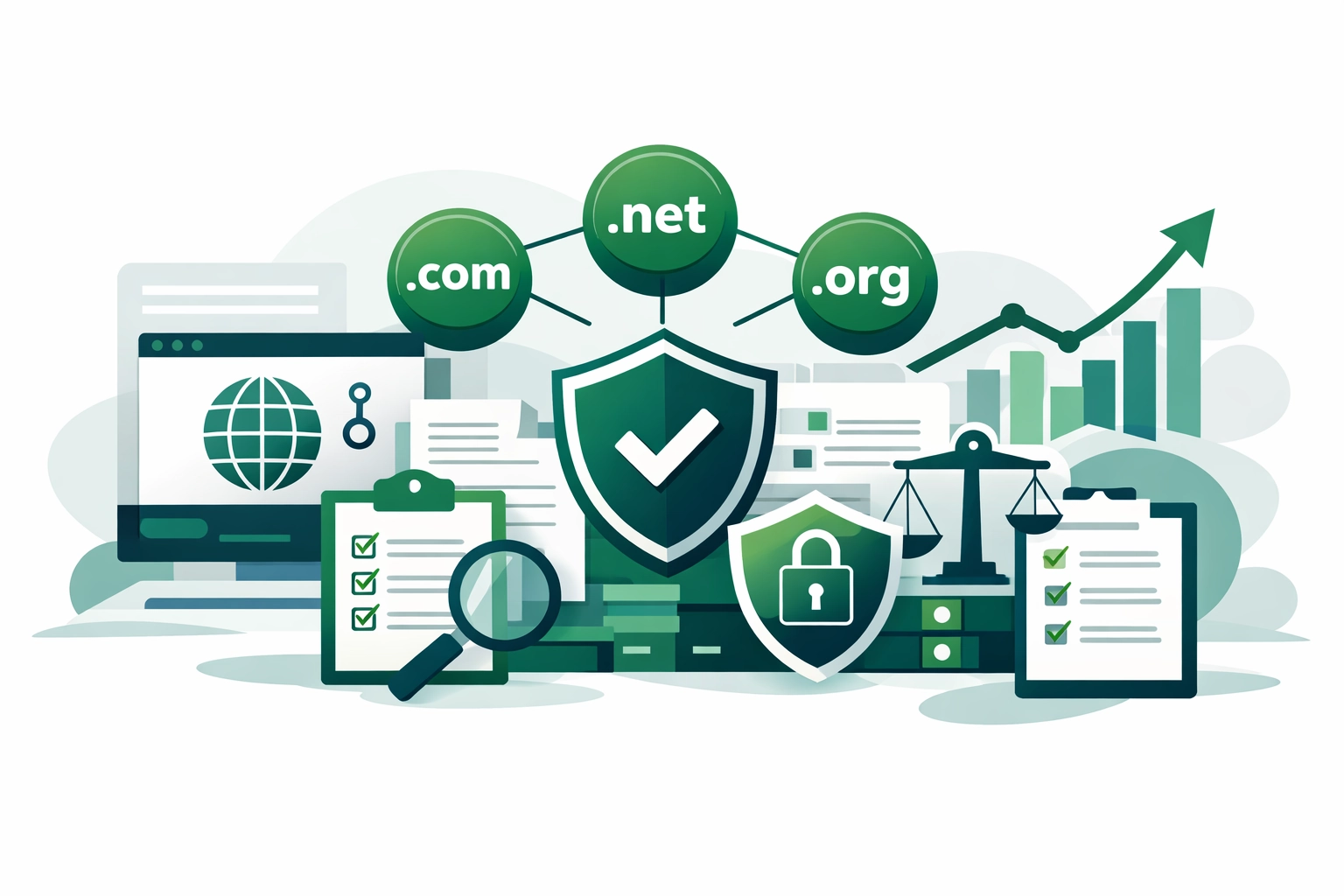
Digital brand protection today is less about reacting to a single trademark dispute and more about maintaining a living map of an organization’s digital real estate. Corporate brands now press their protection teams to operate with the precision of a financial risk function: to quantify exposure, forecast risk, and mobilize an evidence-based response when threats materialize. The modern playbook rests on a data-driven Domain Documentation framework that translates inventories, events, and external signals into actionable decisions. In a world where lookalike domains are proliferating across gTLDs and country-code TLDs (ccTLDs), a proactive, analytical approach is not optional—it is essential. The breadth of threats—from typosquatting to homograph attacks and combosquatting—has spiked in recent years, with lookalike domain activity becoming a persistent risk vector for brand abuse and customer confusion. Industry observers report a growing volume of impersonation activity and disputes driven by expansive domain portfolios and the emergence of new TLDs. For example, 2025 witnessed a record number of domain disputes, underscoring the scale of the challenge and the need for robust portfolio governance.
According to recent industry analyses, the burden is not only about blocking bad domains but also about creating an auditable, defendable, and scalable documentation layer that supports rapid decision-making. This article presents a unique angle: a data-driven framework—the Impersonation Risk Atlas (IRA)—to map and mitigate impersonation risk across an enterprise’s domain portfolio. We’ll blend governance principles with practical data workflows, drawing on credible, up-to-date research from security practitioners and industry analysts to ground the framework in real-world risk.
Expert insight: In mature brand protection programs, documentation becomes a decision-support asset rather than a passive record. An accessible, evidence-based ledger accelerates takedowns, informs licensing and procurement decisions for new domains, and aligns cross-functional teams around a shared risk language.
Limitations to acknowledge: No framework is perfect in isolation. Automated risk scoring must be complemented by expert review, because indicators like domain age, privacy protection, or hosting changes can produce false positives. Privacy protections and data access gaps can obscure signals, requiring iterative data enrichment and human judgment (a point echoed by threat intelligence practitioners and threat-spotting researchers).
1) The impersonation threat landscape: signals that matter
Brand impersonation thrives where brands are global, visible, and frequently targets for phishing, smishing, and fraudulent commerce. A growing body of research highlights the scale and diversity of these threats as brands expand into new TLDs and partner ecosystems. In 2025, industry reporting noted a peak in domain-name disputes and escalating impersonation activity tied to lookalike domains, with attackers exploiting both new and familiar extensions to deceive customers and partners. These trends emphasize the need for a scalable documentation-driven response rather than ad hoc, incident-by-incident tactics.
Key signals that should populate any Domain Documentation framework include:
- Lookalike domains and typosquatting patterns across multiple TLDs and ccTLDs
- Homograph variants that leverage visually similar characters to mislead users
- Newly registered domains that leverage brand names or logo assets in ways that could cause confusion
- Variations in hosting and certificate infrastructure that could indicate cloning or credential harvesting sites
- Privacy-protected WHOIS data that complicates attribution and takedown planning
Industry sources underscore the rising incidence of lookalike domains and brand impersonation. For instance, phishing and impersonation studies documented a sustained risk landscape, with brands facing a steady stream of lookalike domains targeting them across 2023–2025. Security practitioners and analysts emphasize the importance of proactive monitoring and evidence-backed takedown workflows in response to these signals. (phishlabs.com)
Beyond individual incidents, the broader threat surface—enabled by a widening array of TLDs and a global brand footprint—necessitates a portfolio-wide view. The digital brand protection community often cites the need for disciplined governance that aligns legal, security, and marketing functions around a shared data model and risk language. In that sense, domain documentation is not merely a record-keeping exercise; it is a fundamental governance layer that informs strategy, budget allocation, and operational readiness. (static.fortra.com)
2) A data-driven Domain Documentation framework: the Impersonation Risk Atlas
The Impersonation Risk Atlas (IRA) is a practical framework designed to turn a sprawling domain portfolio into a manageable risk surface. It builds on three core ideas: (1) a living inventory (the ledger), (2) evidence trails that tie signals to actions, and (3) decision-ready analytics that translate data into policy and workflow. The IRA is intentionally cross-functional: it creates a common language for legal, security, marketing, and operations to collaborate around a shared view of risk and resilience.
Below is a practical blueprint for constructing an IRA that can scale with portfolio size and the velocity of impersonation threats.
2.1 Core components of the IRA
- Domain Inventory Ledger: A structured catalog of all registered domains, subdomains, and relevant variants across TLDs and ccTLDs, with fields for brand alignment, registration date, expiry, registrant status, and hosting/provider metadata.
- Signal Repository: A curated set of signals that indicate impersonation risk, including lookalike patterns, homograph variants, new registrations, and certificate/hosting anomalies.
- Evidence Trails: Timestamps, screenshots, WHOIS/DNS records, and procurement/takedown actions that create auditable lineage from detection to remediation.
- Risk Scoring: A transparent, explainable scoring model that weights signals by likelihood and impact, while flagging uncertain indicators for human review.
- Remediation Playbook: A library of predefined actions (monitoring, takedown requests, domain blocking, brand protection notices) linked to risk categories and stakeholder owners.
- Governance Cadence: Regular cross-functional reviews, policy updates, and budget planning tied to risk trends and portfolio changes.
The IRA’s aim is not to replace human judgment but to amplify it—提供 consistent, auditable, and scalable decision support across global operations. In practice, the ledger becomes the backbone of a portfolio governance approach that can adapt to new gTLDs and rapidly evolving impersonation tactics.
2.2 A two-axis risk framework to classify domains
To translate signals into actionable decisions, consider a two-axis risk framework that maps each domain along Dimensions A and B, with a lightweight, yet robust, interpretation:
- dimension A: Domain similarity to the brand (Low/Medium/High). This captures visual resemblance, naming variants, and potential for customer confusion.
- dimension B: Portfolio maturity (New/Established). This captures whether the domain is a newcomer or part of a long-standing portfolio.
By combining these axes, you can generate risk strata that meaningfully inform remediation priority. For example, a newly registered domain with high brand similarity and a sophisticated hosting setup may require immediate monitoring and a targeted takedown request, whereas a low-similarity, older-domain variant within a single-market portfolio might be deprioritized or placed in a watchlist with quarterly review. This approach aligns with industry guidance on impersonation signals and risk prioritization, while keeping governance practical for large organizations. (phishlabs.com)
2.3 A practical framework you can implement today
- Step 1: Build the Domain Inventory Ledger Gather domains across TLDs and ccTLDs, de-duplicate variants, and attach metadata (brand alignment, business unit, expiry, hosting, DNS/CNAME configuration).
- Step 2: Establish a Signal Taxonomy Define lookalikes, typosquats, homographs, combosquatting, privacy-limited data, and hosting anomalies as explicit signal types to be tracked.
- Step 3: Collect Evidence Trails Aggregate Whois, DNS, hosting records, certificate data, and takedown actions; store screenshots and incident notes for auditability.
- Step 4: Calibrate Risk Scoring Use a transparent scoring rubric that weights signals by both likelihood and business impact; route uncertain indicators to human review.
- Step 5: Publish a Remediation Playbook Translate risk findings into concrete actions (monitoring, takedown requests, brand protection communications) with clear owners and SLAs.
- Step 6: Schedule Governance Cadence Establish quarterly risk reviews, portfolio-health dashboards, and budget planning anchored to data-driven insights.
To illustrate the data-to-decision flow, consider the following deliverables that commonly appear in a mature Domain Documentation program: an evidence ledger for each signal, a risk score per domain, a remediation ticket history, and a quarterly portfolio risk briefing that aligns with executive priorities. Industry reports repeatedly emphasize the linkage between evidence-driven documentation and effective takedowns and brand protection outcomes. (static.fortra.com)
2.4 A data-driven monitoring cadence: what to track and when
- Real-time monitoring for new registrations with brand-like patterns across high-risk TLDs and ccTLDs
- Weekly checks of hosting changes and certificate deployments that could indicate cloning activity
- Monthly reconciliation of inventory with domain expiry calendars and partner ecosystems
- Quarterly reviews of risk scores, signal taxonomy adjustments, and remediation outcomes
These cadences help ensure that the documentation framework remains current and capable of supporting rapid decision-making during a security incident or a brand lawsuit. External data sources—including independent threat intelligence providers—can complement internal signals, but the core governance should rest on a durable, auditable ledger. (blog.checkpoint.com)
3) Signals, signals everywhere: indicators that drive action
A robust IRA does not rely on a single data source or a one-off alert. It integrates multiple signals and uses them to shape actionable workflows. Here are the signal families that commonly influence risk scoring:
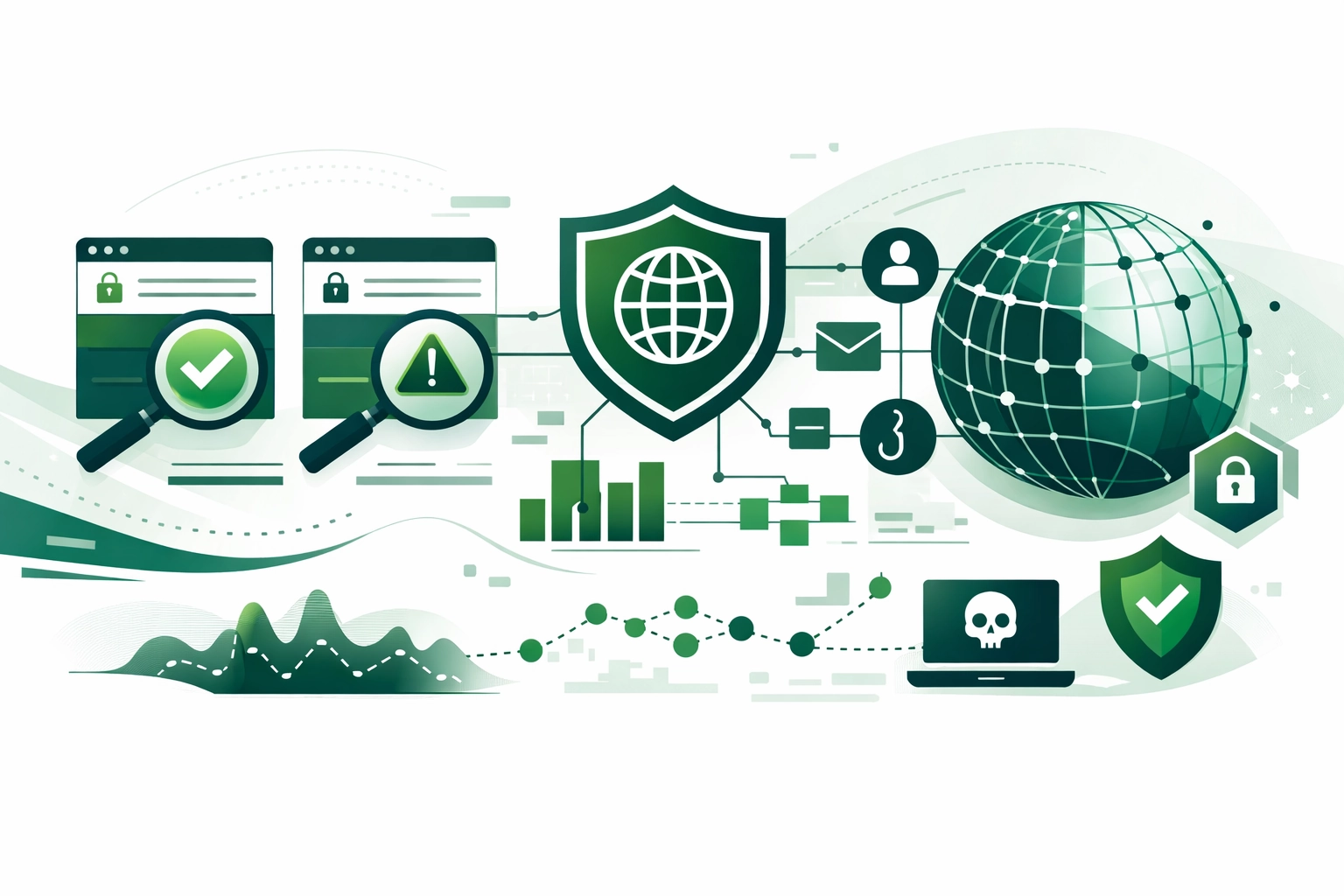
- Visual similarity signals: Domain name variants that visually resemble the brand (typosquats, logomarks in subdomains, homographs).
- Temporal signals: Rapid domain registration surges after product launches, partnerships, or regulatory events.
- Infrastructure signals: Changes in hosting, server location, certificates, or DNS configurations that suggest cloning or credential harvesting sites.
- Attribution signals: WHOIS privacy, privacy-protecting registrants, or inconsistent contact data that complicate takedown attribution.
- Historical signals: Domain age, prior disputes, and prior security incidents involving similar domains.
Industry practitioners emphasize the importance of combining these signals with a proven risk scoring model and human review for ambiguous cases. A modern reputation-scoring approach—used by major security platforms—helps teams triage efficiently and decide when to escalate to legal or law enforcement actions. (learn.microsoft.com)
4) Data sources, signals, and data quality: practical considerations
Effective risk analytics depend on data quality and access. Three practical considerations shape success in large, multi-country brand portfolios:
- Data completeness: Not all signals will be visible due to privacy protections or data access constraints. This reality argues for a layered data model that favors auditable workflows and human-in-the-loop review rather than a strictly automated, black-box scoring system.
- Data provenance: Preserve the provenance of every signal, including where it came from (internal system, external vendor, or regulatory database) and who acted on it.
- Data integration: Bridge RDAP/WG/WIP RIRs, DNS data, domain-change logs, and incident records into a single view that supports cross-functional decision-making.
Industry practitioners highlight that even sophisticated reputation scoring, like Microsoft Defender TI’s rating system, requires follow-up investigations when indicators are unknown or ambiguous. This is a reminder that the IRA should blend automated signals with human expertise to avoid misclassification and to enable precise, timely responses. (learn.microsoft.com)
5) A practical example: how an Impersonation Risk Atlas plays out in a real portfolio
Consider a hypothetical multinational consumer brand with a portfolio spanning dozens of domains across multiple regions. The IRA flags a newly registered domain that visually resembles the brand name, uses a high-risk TLD, and has a certificate issued within 24 hours. The risk score places this domain in a high-priority category due to:
- High domain similarity and potential customer confusion
- New domain with a short history, increasing likelihood that the site is intended for phishing or fraud
- Hosting on a provider known to support rapid domain deployment and country-specific clones
The Remediation Playbook triggers a three-pronged response: (a) monitor and collect additional evidence (screenshots, DNS history, SSL certificate data) to strengthen the takedown case, (b) initiate a takedown request with the registrar and hosting provider, and (c) issue a brand-protection notice to regional stakeholders and partners to prevent inadvertent customer confusion. Within days, the domain is removed or redirected, and the incident is logged in the Evidence Ledger with a complete chain of custody. This practical workflow illustrates how the IRA translates signals into timely, auditable action that protects both customers and partners. (phishlabs.com)
6) Implementation considerations and governance: making IRA work at scale
To scale the Impersonation Risk Atlas across a global enterprise, consider these governance and operational guardrails:
- Cross-functional ownership: Legal leads takedown actions; Brand defines the risk taxonomy; IT/Security maintains monitoring and data pipelines; Compliance ensures regulatory alignment.
- Data retention and privacy: Establish clear policies on data retention, access controls, and privacy considerations, especially around WHOIS privacy and cross-border data flows.
- Automation with guardrails: Automate signal collection and initial triage, but maintain human review for high-risk or ambiguous signals to avoid false positives and misdirected takedowns.
- Documentation discipline: Ensure each signal and action is logged with evidence and timestamps to support disputes, audits, and future risk forecasting.
- Budget and capabilities: Allocate resources for ongoing monitoring, data enrichment, and incident-response readiness; link this to portfolio governance metrics to justify investment.
Industry evidence suggests that proactive, documentation-driven domains governance reduces time-to-takedown and improves risk-management outcomes. In 2023, domain impersonation reporting highlighted how evidence-based approaches can shift outcomes from reactive to proactive. (static.fortra.com)
7) Limitations and common mistakes: what to avoid
Any framework has limits, and the IRA is no exception. Common mistakes and their mitigations include:
- Overreliance on automated scoring: Automated signals must be validated; unknown indicators require deeper investigation rather than defaulting to a high-risk label. This is a well-documented risk in modern threat intelligence practices. (learn.microsoft.com)
- Data gaps due to privacy controls: Privacy-protective measures can obscure attribution and hinder takedown decisions. Build redundancy with multiple data sources to mitigate blind spots.
- Underestimating new gTLD and brand-TLD abuse: Threat actors increasingly exploit new extensions (including brand-specific TLDs) to bypass traditional monitoring. A forward-looking portfolio must include these extensions in risk planning. (blog.checkpoint.com)
- Neglecting governance alignment: Without cross-functional governance, the ledger becomes a repository of records rather than a decision engine. Regular cadence and executive sponsorship are essential. (static.fortra.com)
Industry analyses emphasize that brand protection success hinges on data quality, governance discipline, and a willingness to adapt to the evolving impersonation landscape. For practitioners, the takeaway is clear: data alone is not protection; it is the governance framework—anchored by domain documentation—that enables resilient brand protection. (phishlabs.com)
8) How BPDomain fits into this framework: editorial, not promotional
BPDomain LLC has long stood for rigorous, evidence-driven brand protection and portfolio governance. The Impersonation Risk Atlas aligns with the core value proposition: turning a complex domain landscape into a decision-ready governance asset. BPDomain’s documentation-centric approach helps organizations maintain a transparent ledger of digital assets and a resilient response capability—crucial for enterprise-grade protection across multi-region portfolios. For organizations exploring a scalable, documented approach to domain governance, BPDomain offers governance playbooks, risk frameworks, and domain-documentation capabilities that integrate with existing security and legal workflows.
For readers who want to explore how a documentation-first approach can be operationalized in their own context, consider starting with these practical steps: (1) inventory and categorize domains by brand alignment, (2) implement an evidence-led signal taxonomy, (3) establish a governance cadence with cross-functional champions, and (4) pilot an IRA in a high-risk region or business unit before expanding globally. BPDomain’s documentation framework provides a structured path to these outcomes, with the flexibility to tailor the ledger and workflows to specific regulatory environments and business needs.
Useful BPDomain and related resources can be accessed through client channels such as the MA portal and related TLD-portfolio resources. For reference, you can explore the client’s domain lists by TLD or country, as well as the pricing and RDAP/WHOIS databases in the linked pages: BPDomain MA portal, List of domains by TLDs, and Pricing. These resources illustrate how a documentation-led governance framework can scale across a global portfolio while remaining aligned with enterprise objectives.
9) Quick-start checklist: turning IRA theory into action
- Map the current domain portfolio to establish a baseline ledger with essential metadata (brand alignment, expiry, hosting, and key contacts).
- Define a signal taxonomy for impersonation threats and implement automated collection pipelines for these signals.
- Build an evidence ledger that captures take-down actions, legal notices, and remediation outcomes with time stamps.
- Develop a transparent risk scoring rubric and train cross-functional teams on how to interpret scores and act on them.
- Establish a quarterly governance cadence with CEO/GC-level reporting on portfolio risk and remediation outcomes.
- Run a pilot IRA in a high-risk region or product line and iterate based on lessons learned.
Conclusion: A disciplined, data-driven path to brand resilience
In an era where brand impersonation threats are proliferating across the domain landscape, a data-driven Domain Documentation framework like the Impersonation Risk Atlas offers a clear path to resilience. By organizing inventory, signals, and actions into a transparent, auditable system, organizations can shift from reactive takedowns to proactive risk management. The success of this approach rests on governance that aligns cross-functional teams, data quality and provenance that enable reliable decision-making, and an ongoing commitment to iterating the framework as the threat landscape evolves. The literature and practitioner reports are consistent: evidence-driven domain protection reduces incident impact and accelerates response, especially when extended across a global portfolio. BPDomain’s documented approach to governance provides a practical, editorially grounded blueprint for enterprises seeking to elevate their brand protection program from ad hoc responses to disciplined, scalable protection. If you’re ready to explore a domain-documentation-centric path for your brand, the MA portal and related resources offer a practical starting point to translate theory into action.