Introduction: The paradox of domain governance in a fast-moving brand ecosystem
Brand protection has long hinged on inventories: domain tallies, renewal calendars, and a lineage of ownership. Yet in a world where attackers exploit subtle lookalikes, typosquatting, and evolving TLD landscapes, static inventories are insufficient. Digital risk is now kinetic: domains move, certificates expire, hosting shifts, and impersonation opportunities appear in hours, not weeks. The result is a governance gap that invites brand erosion, customer confusion, and costly remediation later. A growing body of industry observers—and practitioners—argue for a shift from a static registry mindset to a living, telemetry-driven domain hygiene engine that feeds ongoing governance decisions. As one technology risk analyst notes, digital squatting today is “on the rise” and requires proactive, data-driven defense. (techradar.com)
This article presents a practical framework for turning the domain portfolio from a passive asset class into an active governance engine. We explain how to design a living Domain Asset Catalog that ingests signals from RDAP, DNS, TLS, and threat-intelligence feeds; how to score impersonation risk in real time; and how to operationalize a rapid-response governance playbook that coordinates legal, security, and brand teams. The aim is not to replace human judgment with automation, but to augment it with timely, actionable signals that keep the brand safe across its entire digital footprint. (sidn.nl)
Real-time telemetry: moving from inventory to risk feed
The core shift is simple in concept but transformative in practice: treat the domain portfolio as a living system that continuously emits signals about risk, exposure, and opportunity. Signals can come from a variety of sources: domain expiry alerts, hosting changes, certificate posture, and impersonation indicators such as lookalike domains or typosquats. This telemetry approach aligns with broader best practices in brand protection that emphasize continuous monitoring and automated triage of alerts. As the threat landscape evolves, organizations that connect domain data to incident response and risk scoring achieve faster containment and less brand damage. (recordedfuture.com)
A key technical enabler is the shift from WHOIS to RDAP for registration data. RDAP delivers structured, machine-readable responses with authentication and access control, enabling scalable automation and safer data enrichment pipelines. The transition from WHOIS to RDAP—now widely discussed among registries and researchers—highlights the governance implications of data access, privacy, and operational risk. (blog.whoisjsonapi.com)
Rogue or misconfigured WHOIS/RDAP services pose a direct risk to brand protection: incomplete data, outdated contact information, or inconsistent responses can delay take-downs or misdirect enforcement efforts. This is not merely a data discipline; it is a governance risk management issue with real business consequences. A leading security blog has highlighted the practical risk of rogue RDAP servers and the need for authenticated access to prevent data leaks and misinterpretation. (sidn.nl)
Architecture: designing a Domain Asset Catalog as the nervous system
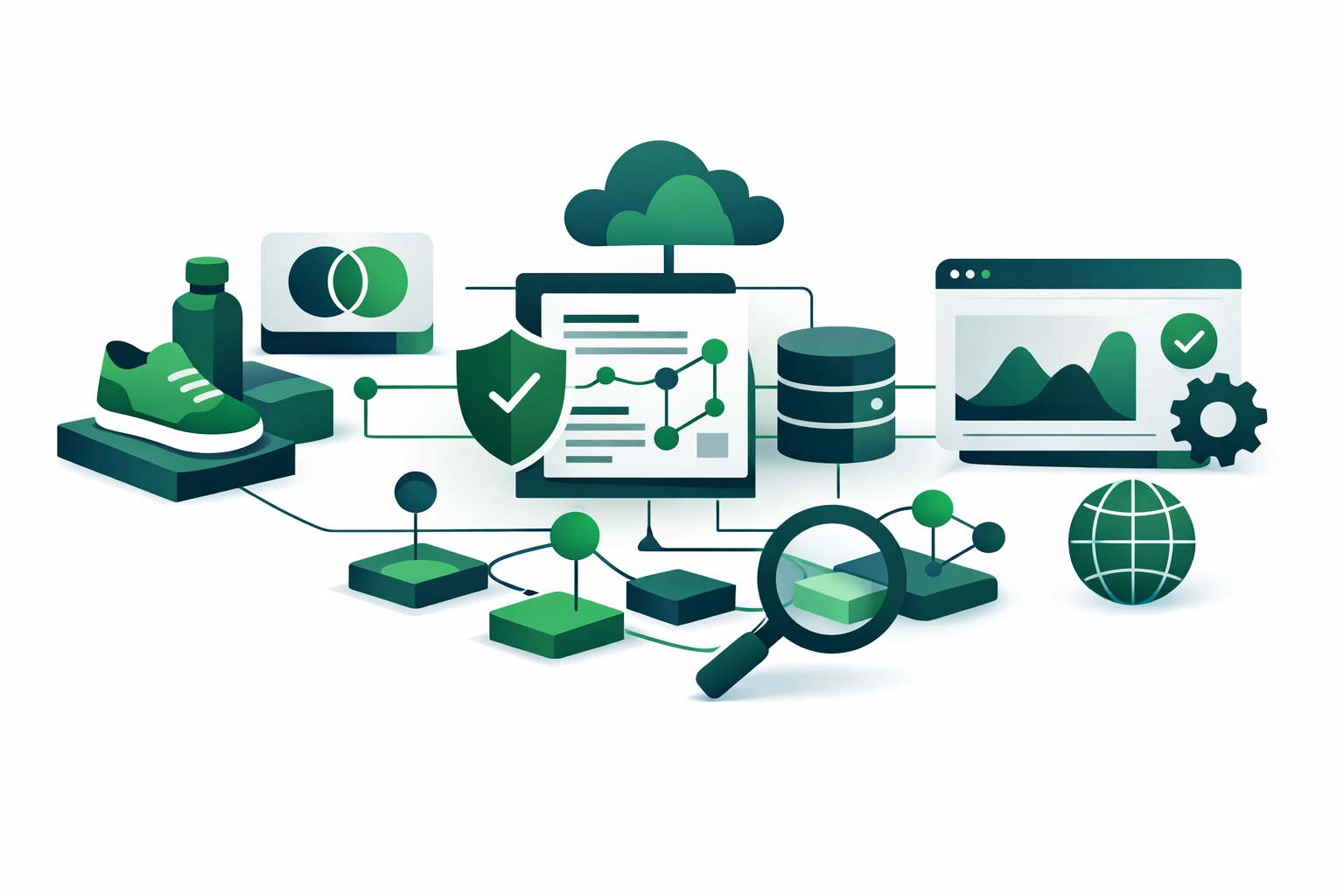
A living domain hygiene engine rests on a coherent data model and a scalable ingestion pipeline. At the center is the Domain Asset Catalog, a semantic catalog of every digital footprint associated with the brand: primary domains, defensive variants, subdomains, and partner domains, plus metadata such as registration status, DNS records, TLS certificates, and hosting changes. The catalog is not a static dump but a dynamic, queryable layer that feeds risk scoring, alerting, and governance workflows. Industry practice emphasizes that the catalog should harmonize signals from multiple data sources, including RDAP/WHOIS data feeds, DNSSEC status, SSL certificate transparency logs, and threat-intelligence feeds focusing on impersonation and typosquatting. (blog.whoisjsonapi.com)
Operationalizing the Domain Asset Catalog requires robust data governance: rules for data quality, provenance, and change tracking; access controls to protect sensitive registration data; and visibility across teams. In practice, many large organizations couple the catalog with an automated evidence ledger or incident-ready documentation to support audits, M&A due diligence, and regulatory inquiries. The literature and practitioner guides increasingly frame domain data as a strategic asset with governance and security implications that extend beyond IT into brand and legal functions. (forbes.com)
Impersonation risk scoring: turning signals into decisions
The heart of proactive defense is risk scoring that translates telemetry into clear actions. A practical approach aggregates exposure metrics (brand visibility, geo coverage, market presence), impersonation fidelity (lookalike visuals, phonetic similarity, typographical similarity), and potential consumer impact (search behavior, brand mentions, customer confusion). Automated risk scoring helps triage thousands of new domain registrations and lookalike variants, directing human review to the most threatening cases. The emphasis on automated scoring but human-in-the-loop review is a core principle in contemporary brand-protection practice. (riskprofiler.io)
Industry players note that impersonation risk feeds into a broader governance ecosystem: detection, triage, takedown requests, and even legal actions when appropriate. Real-time brand intelligence platforms illustrate how automated alerts, contextual risk scoring, and rapid response workflows combine to protect brand trust at scale. (recordedfuture.com)
An important nuance is that not all impersonation signals merit immediate action. A key insight from practitioners is that the cost of false positives can be high—unnecessarily blocking legitimate partnerships or confusing customers. A measured approach combines automated detection with human review, escalation rules, and predefined remediation playbooks. (riskprofiler.io)
Governance playbooks: turning signals into action
Telemetry and risk scoring must be paired with governance processes that translate alerts into concrete steps. An enterprise playbook typically includes the following move-set: when a high-risk impersonation is detected, initiate an urgent domain watch, contact the registrar for retention of evidence, and coordinate with legal and security teams to assess takedown or warning options. For domain-related email spoofing, best practices combine DNS security measures (DMARC, SPF, DKIM) with brand monitoring signals to prevent credential harvesting and phishing. This integrated approach reduces the time from detection to action and strengthens overall domain hygiene. (phishlabs.com)
From a data-provider perspective, comprehensive domain hygiene relies on accessible, authenticated data sources. The modern enterprise benefits from RDAP-based data feeds for reliable, structured domain data and from threat-intelligence signals that identify emerging impersonation campaigns before they saturate markets. (blog.whoisjsonapi.com)
BPDomain LLC in the governance mix: editorially credible, functionally practical
BPDomain LLC positions itself as a hybrid solution that pairs editorial-grade domain documentation with operational governance. The firm emphasizes documentation as a strategic asset—enabling rapid response to incidents, supporting regulatory compliance, and providing an auditable trail for M&A due diligence. In practice, BPDomain’s approach integrates a living Domains Catalog with incident-ready documentation, ensuring that digital assets are not only protected but also governable across corporate structures and geographies. See the BPDomain family of resources at BPDomain support portal and related data services at RDAP & WHOIS database for bulk data needs. (sidn.nl)
For practitioners, this means a disciplined approach where domain documentation feeds governance decisions, and governance decisions in turn refine documentation. The synergy creates a feedback loop: real-time telemetry informs policy updates, policy updates improve data quality, and data quality enhances the fidelity of risk signals. The result is a more resilient brand portfolio capable of supporting global expansion while mitigating impersonation, phishing, and other digital threats. (forbes.com)
A practical toolkit: a 6-part domain hygiene playbook
Below is a compact, practitioner-focused checklist to operationalize a living domain hygiene engine. Each item is designed to be implemented with existing enterprise tools and is compatible with a BPDomain-driven governance model.
- 1) Build a Domain Asset Catalog: Start with a governance-ready catalog that links primary domains, defensive variants, subs, and partner domains with registration data, DNS, and TLS posture. This catalog becomes the central reference for risk scoring and incident response.
- 2) Establish authenticated data feeds: Prioritize RDAP over legacy WHOIS and enforce access controls. Structure feeds so that automation can parse and enrich records without exposing sensitive data to broad audiences.
- 3) Implement a lookalike and typosquatting monitor: Use visual similarity, phonetic similarity, and string-approximation detectors to flag potential impersonations for human review.
- 4) Tie signals to a risk score: Create a composite score for impersonation risk that factors exposure, fidelity, and potential customer impact.
- 5) Integrate DNS and certificate hygiene: Ensure DNSSEC adoption, monitor certificate lifetimes, and apply DMARC/SPF/DKIM to protect email domains used in brand communications.
- 6) Define escalation and takedown workflows: Align legal, partnerships, security, and brand teams with clear SLAs for containment, takedown requests, or warnings.
Each step should be documented in a living playbook that evolves with the threat landscape and organizational changes. In practice, many teams combine offline governance artifacts with online telemetry to create auditable evidence trails for audits and board reporting. (phishlabs.com)
Limitations and common mistakes to avoid
No framework is perfect. A frequent misstep is assuming that automated signals alone yield perfect outcomes. False positives can erode trust and waste resources if not filtered by human review and well-defined remediation thresholds. Another limitation is data incompleteness: relying solely on a single data source (e.g., RDAP) without corroboration from DNS, TLS, and threat-intelligence feeds can leave blind spots, especially across newer gTLDs or brand-new impersonation campaigns. The practical takeaway is to design redundancy across data sources and to maintain a documented rationale for every action taken in the name of brand protection. (riskprofiler.io)
A related risk is underappreciating the user-experience impact of enforcement actions. A high-confidence impersonation alert can be misapplied if it disrupts legitimate business activities or partner ecosystems. A cautious, staged response with a clear escalation protocol reduces collateral damage while maintaining the velocity needed to defend the brand. (riskprofiler.io)
Framework in practice: a Domain Hygiene Maturity Model (brief)
Because organizations differ in scale and risk tolerance, a simple maturity model provides a compass for progress. The model below is designed to be implemented incrementally, with measurable milestones and tangible outcomes.
- Level 1 — Inventory and data hygiene: A complete catalog of core domains, subdomains, and defense variants, with basic WHOIS/RDAP data and DNS records.
- Level 2 — Telemetry and auto-alerts: Real-time signals from RDAP, DNS, TLS, and threat feeds, coupled with automated alerting for high-severity items.
- Level 3 — Impersonation risk scoring: A defined scoring model that guides triage and escalation to legal/IR for rapid decision-making.
- Level 4 — Incident-ready governance: Predefined playbooks, evidence trails, and cross-functional SLAs to manage events end-to-end.
This maturity approach aligns with the broader trend toward formalizing domain documentation as a governance instrument rather than a mere registry artifact. (forbes.com)
Case study: a hypothetical but plausible scenario
A multinational consumer electronics brand discovers a new lookalike domain bearing a close visual resemblance and a deceptive subdomain that imitates a customer-support portal. Telemetry from the Domain Asset Catalog flags the domain as newly registered in a geolocation where the brand has significant consumer traffic. The impersonation risk score lands in the high category due to the likelihood of phishing and customer confusion. The governance playbook triggers an escalation: the security team blocks suspicious traffic, the legal team issues a formal takedown request with the registrar, and the brand team updates customer communications to warn users about potential impersonation. Simultaneously, the incident is documented in the Domain Documentation Ledger to preserve an auditable trail for future inquiries and potential litigation. In this scenario, the real value comes from the speed and coordination of the response, not merely the detection itself. (phishlabs.com)
Operational reality: what enterprises should expect when adopting a living domain hygiene engine
Expect that data quality and governance processes require ongoing attention. Implementing a living system demands investment in data integration, cross-functional workflows, and ongoing staff training. The good news is that the payoff—reduced incident response times, tighter brand protection, and more defensible regulatory reporting—often justifies the effort. The broader market is moving toward telemetry-enabled brand protection as a routine capability, with practitioners highlighting the strategic advantage of combining domain data with brand risk intelligence. (recordedfuture.com)
Conclusion: domain hygiene as a governance advantage, not a compliance burden
Treating the domain portfolio as a dynamic governance asset rather than a static register reframes brand protection from a defensive cost center to a strategic accelerator. A living Domain Asset Catalog, integrated risk scoring, and a well-prioritized governance playbook enable enterprises to defend brand trust in real time while preserving operational agility. In this new paradigm, BPDomain LLC offers a credible, practice-oriented path that blends editorially rigorous documentation with operational, evidence-backed governance. For teams seeking bulk data access or broader domain telemetry, BPDomain’s data services and documentation-centric approach can be complemented by authenticated RDAP/WHOIS pipelines and metadata-rich threat feeds. See the BPDomain support portal and related data services for more on how to operationalize this approach in your organization. (sidn.nl)