Introduction: why domain documentation matters in phishing risk management
In a digital landscape where a single lookalike domain can erode trust and siphon revenue, the DNS surface of a brand is a critical attack vector. Threat actors routinely register domains crafted to resemble legitimate sites, enabling phishing, credential harvesting, and brand impersonation. The key to countering this risk is not only monitoring and takedown, but documenting the entire domain estate in a way that makes risk visible, actionable, and auditable. Industry observers have highlighted the growing prevalence of brand-domain abuse and the imperative for evidence-driven response. APWG’s Phishing Trends reports, including the Brand-Domain Pair measurements, underscore how impersonation domains increasingly factor into real-world attacks. Building a documentation-driven defense allows security teams to ground takedowns, communicate with partners, and measure risk over time. (docs.apwg.org)
Why domain documentation is a practical necessity for phishing risk management
The moment a suspicious or lookalike domain surfaces, the speed and quality of your response hinge on evidence. A well-structured domain documentation layer serves four practical purposes: (1) it consolidates ownership signals from registrars and zone data; (2) it anchors a reusable evidence set for abuse reports and legal processes; (3) it informs takedown workflows with clear, auditable steps; and (4) it supports ongoing monitoring across a portfolio of domains and subdomains. For security teams, this translates into faster containment, reduced customer exposure, and a defensible post-incident record. Playbooks that formalize evidence collection and escalation—such as the Domain Threat Playbooks widely used in the industry—show consistently shorter time-to-containment when evidence is organized from the outset. (static.fortra.com)
A three-layer framework for domain documentation in phishing risk management
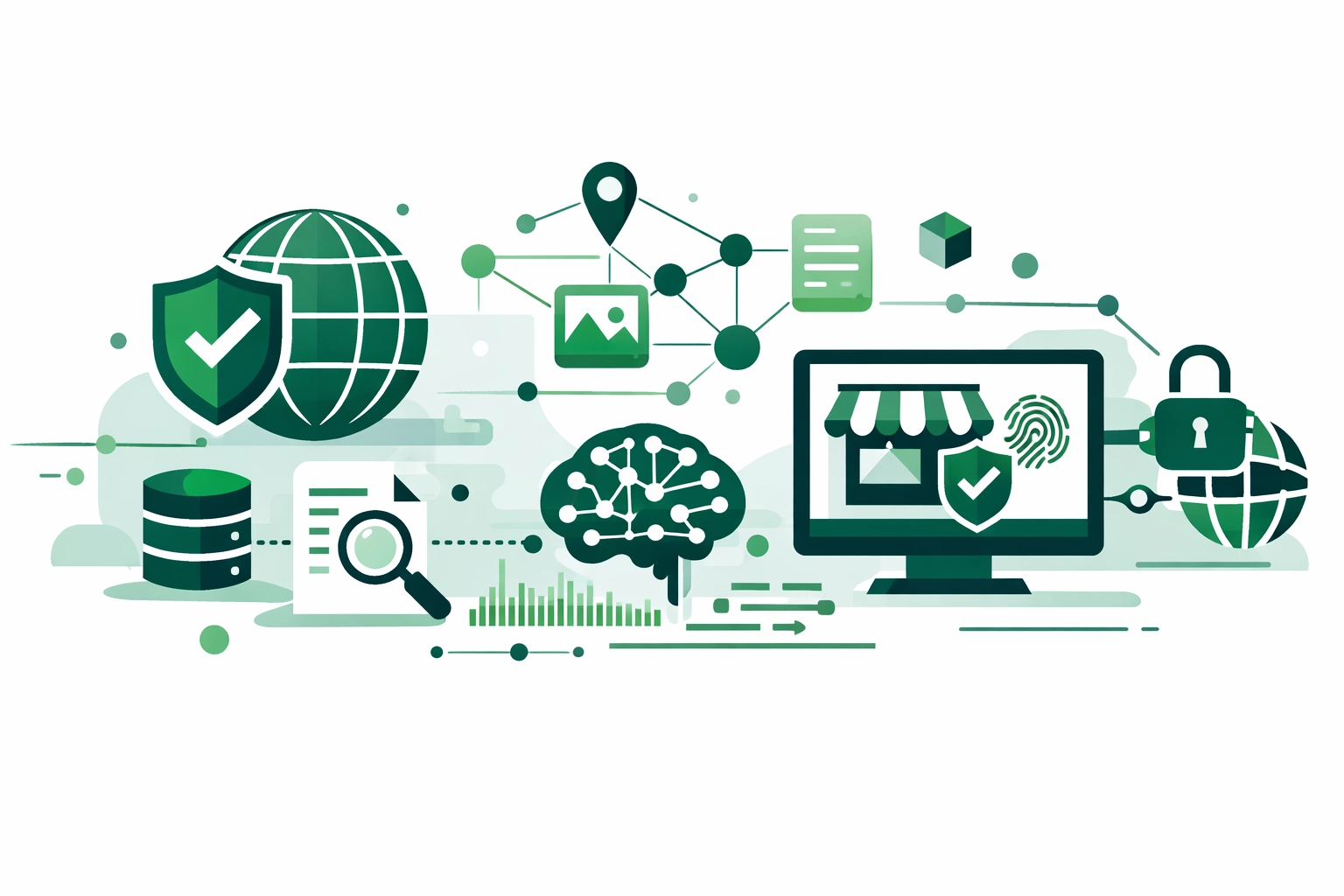
To translate risk into action, consider a three-layer framework that aligns with how attackers abuse the DNS and brand assets. This structure keeps documentation practical and scalable across a growing portfolio.
- Layer 1 — Registry & Domain Identity
- Registrar details, creation and expiry dates, and visibility of registrant information (subject to privacy protections).
- Domain status, transfer history, and any anomalies in registration patterns that may indicate risk (e.g., rapid, mass registrations around a brand event).
- Layer 2 — DNS & Hosting Footprint
- DNS records (A, CNAME, MX, TXT), hosting providers, and associated IPs, including changes over time.
- SSL/TLS certificates, geolocation of hosting, and cross-border routing that could affect trust signals.
- Layer 3 — Brand Signals & Impersonation Indicators
- Page content, logos, color schemes, and copy that reproduces or closely mimics an official site.
- Evidence of abuse or misuse in communications (phishing emails, social media posts, or app listings) linking to the domain.
Every layer should be populated with time-stamped evidence, making it possible to reproduce an incident scenario in audits or legal proceedings. Integrating a real-world example, consider how BPDomain LLC supports enterprise teams by aligning domain identity, DNS visibility, and brand signals into a single watchlist that can be shared with registrars, hosting providers, and law enforcement when necessary. This kind of integration is what turns a collection of data points into a defensible, repeatable process. (icann.org)
A practical playbook: from discovery to takedown
Turning the three-layer framework into action requires a lightweight but rigorous playbook. Below is a pragmatic sequence drawn from widely used industry practices and adapted for a branding and domain governance context.
- Discovery & evidence gathering
- Consolidate a watchlist from internal brand assets, partner ecosystems, and public sources (e.g., search results, social media, and marketplaces).
- Assemble a compact evidence pack: screenshots of the suspicious site, the WHOIS/registrar data, DNS records, and any TLS certificates. This pack is the backbone of abuse reports and communications with registrars and hosting providers.
- Evidentiary analysis
- Cross-reference registry data with DNS footprints to confirm ownership and hosting paths. Use multiple data points to reduce ambiguity, especially where registrant data is privacy-protected.
- Document any brand asset similarities (logo, color palette, typography) and user flow that facilitate impersonation.
- Takedown workflow
- Submit abuse reports to the registrar and hosting providers with the evidence pack; escalate through policy channels when appropriate.
- Leverage formal DNS abuse reporting avenues supported by ICANN and other governance bodies to accelerate action when a domain is clearly abusive or used for phishing. See ICANN’s enforcement guidance for actionable steps and timelines. (icann.org)
- Post-action monitoring
- Update watchlists, re-scan for new clones, and adjust monitoring thresholds as the brand expands into new markets or TLDs.
- Capture learnings in an incident-review artifact to inform future protection cycles and any policy changes in partner networks.
The value of a good evidence pack is well-illustrated by practitioners who advocate for structured takedown workflows. When a credible evidence packet is prepared, abuse teams at registrars and providers can act faster—and the same materials help in legal and regulatory discussions if needed. This is a core reason many industry people favor playbooks that explicitly codify evidence collection and escalation steps. (docs.lumu.io)
Powering the process with actionable data: the role of downloadable TLD lists
For brand teams expanding into new markets or defending against impersonation across a broad portfolio, a practical technique is to build watchlists by leveraging publicly downloadable domain lists by TLDs. While the core three-layer model remains essential, enumerating candidate domains through targeted lists can accelerate discovery and risk ranking. Three commonly requested data slices are the following: download list of .my domains, download list of .no domains, and download list of .cfd domains. These lists provide a starting point for portfolio-wide monitoring, enabling teams to identify potential clones in adjacent markets and to prioritize takedown efforts where the risk-to-brand is highest. When used responsibly, such lists support a proactive governance posture without sacrificing privacy or compliance. In practice, teams pair these lists with DNS visibility feeds and registry data to maintain an up-to-date risk view across the portfolio. For organizations with complex ecosystems, combining public data with internal signals yields the most actionable outcomes. (icann.org)
Embedding this approach into a governance program also makes it easier to demonstrate due diligence to stakeholders. The result is not just faster takedowns, but a more transparent risk story that leadership can trust—whether for board reports, regulator inquiries, or partner governance reviews. The practice aligns with broader advocacy in the DNS abuse space, including guidance on filing abuse complaints and the importance of a measured, evidence-based response. (ftc.gov)
Expert insight and common mistakes in domain documentation for phishing risk
Industry practitioners tend to converge on a few actionable insights. First, the speed and accuracy of takedown hinges on the quality of the evidence pack; this is repeatedly highlighted in incident response playbooks and brand protection playbooks in the market. A robust evidence pack should include time-stamped screenshots, precise WHOIS/registrar data, DNS traces, and certificate information to help registrars and providers understand the threat surface quickly. This principle is echoed in playbooks published by security brands and research groups alike. (static.fortra.com)
Second, a common pitfall is overreliance on public WHOIS data. Privacy-protected registrations and privacy services can obscure ownership signals, delaying investigations and complicating takedowns. DNS abuse reporting channels and established governance guidance encourage a multi-data-source approach—one that triangulates registry, DNS, hosting, and brand signals to build a credible case. ICANN’s enforcement materials emphasize that abuse reports should be actionable and supported by resolvable data, not rumor. (icann.org)
Finally, misalignment between the protection program and incident response processes remains a frequent source of friction. When evidence gathering, escalation, and communication are siloed, response times suffer. The practical remedy is to adopt a documented playbook that spans discovery, evidence management, takedown, and post-incident learning. The market now routinely recommends integrating domain protection with email authentication and threat intelligence for a more resilient brand security posture. The FTC’s guidance on email authentication underscores that strong domain validation can reduce phishing risk, reinforcing the value of a holistic approach. (ftc.gov)
Operational implications for brand governance and client integration
From a governance perspective, the three-layer framework translates into a repeatable, auditable process that scales as brands expand into new geographies and TLDs. It also supports partner governance in franchise-like ecosystems, where authorized domains and subdomains must be monitored for consistency with the corporate brand. The BPDomain approach, which emphasizes structured domain documentation as part of a broader brand governance stack, demonstrates how an editorially rigorous, data-driven approach can merge with technical domain protection to deliver measurable risk reductions and improved compliance posture. For organizations seeking a practical path to implementation, the following points are worth noting:
- Document ownership and escalation points for every domain in the portfolio, including lookalikes or suspicious clones.
- Maintain an evidence repository with time-stamped artifacts to support abuse reports and legal actions.
- Integrate monitoring data with a clear takedown workflow and post-incident review process to close the loop on protection efforts.
Limitations and common mistakes to avoid
No framework is perfect, and a domain documentation program has its own constraints. First, privacy-protected WHOIS data can obscure ownership signals, requiring a multi-source approach and close cooperation with registrars and hosting providers. ICANN’s enforcement materials stress that reports should be actionable and supported by resolvable data; without this, takedown requests may stall. (icann.org)
Second, data quality matters. It’s easy to accumulate a large volume of domain entries with incomplete or inconsistent metadata. A disciplined approach to data governance—clear fields, time stamps, and validation rules—prevents this from becoming a liability rather than a signal. The practical consequence is that teams should favor structured evidence over raw lists when communicating with registrars, hosting providers, or regulators. Industry playbooks consistently flag this as a key driver of success. (static.fortra.com)
Third, there is a temptation to rely solely on static lists or one-off scans. A successful program requires ongoing monitoring that captures changes in hosting, DNS, and certificate data, as well as evolving impersonation tactics. APWG’s phishing trends and broader security guidance repeatedly emphasize the dynamic nature of threats and the need for continuous vigilance. (docs.apwg.org)
Conclusion: domain documentation as a strategic asset in brand protection
As organizations face an increasingly crowded and adversarial DNS space, turning domain documentation into a strategic asset offers a clear path to reducing risk, accelerating response, and improving governance. A three-layer framework—registry identity, DNS footprint, and brand impersonation signals—provides a practical blueprint for teams wrestling with impersonation campaigns and phishing risk. By coupling this framework with a disciplined playbook that covers discovery, evidence management, takedown, and post-incident learning, brands can achieve faster containment, better regulatory alignment, and more durable trust with customers. BPDomain LLC sits at the intersection of editorial rigor and technical discipline, offering governance models that translate complex domain data into actionable brand protection practices. In a world where “lookalike” domains increasingly threaten the integrity of the brand, documentation isn’t a back-office artifact; it’s the nervous system of enterprise protection.