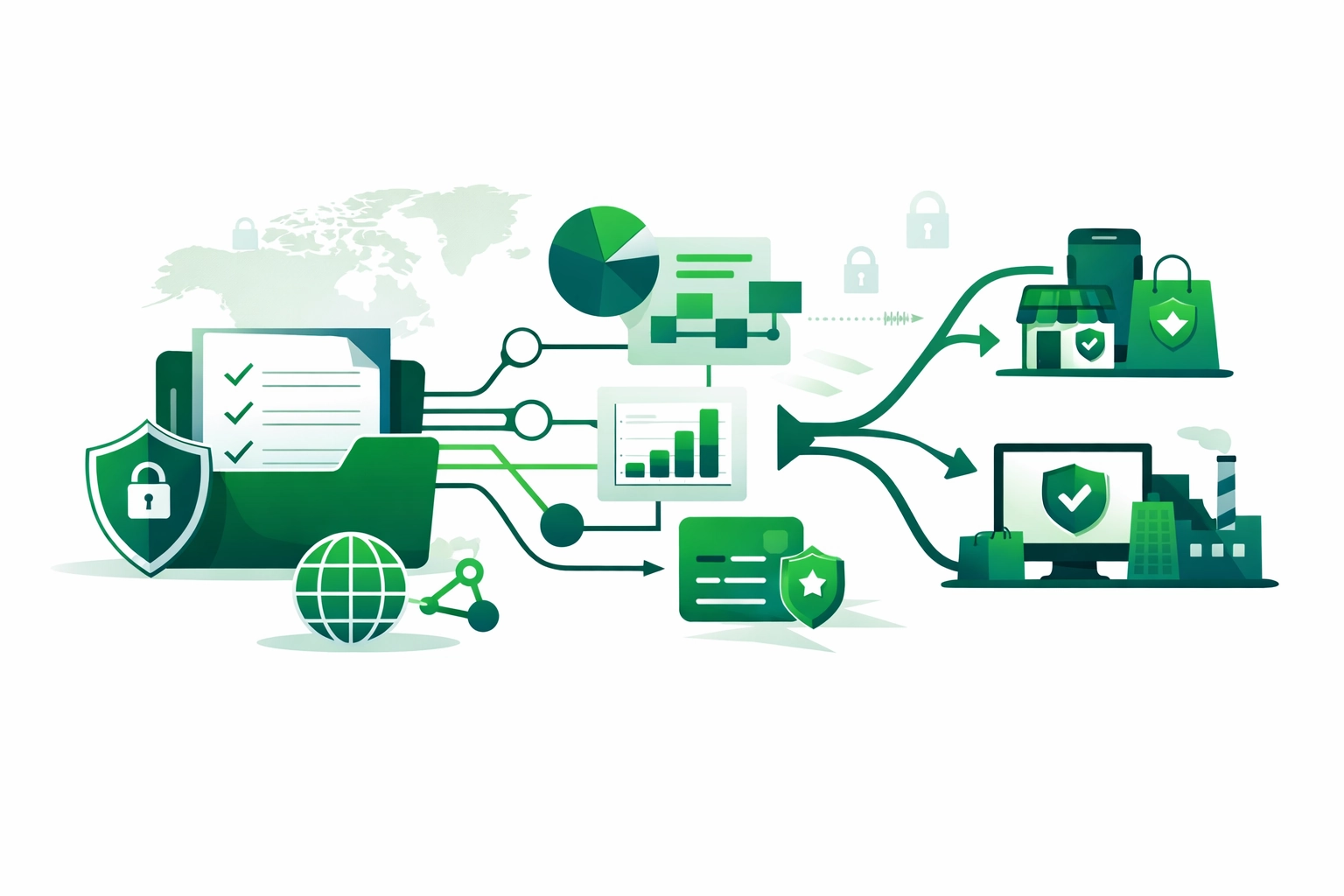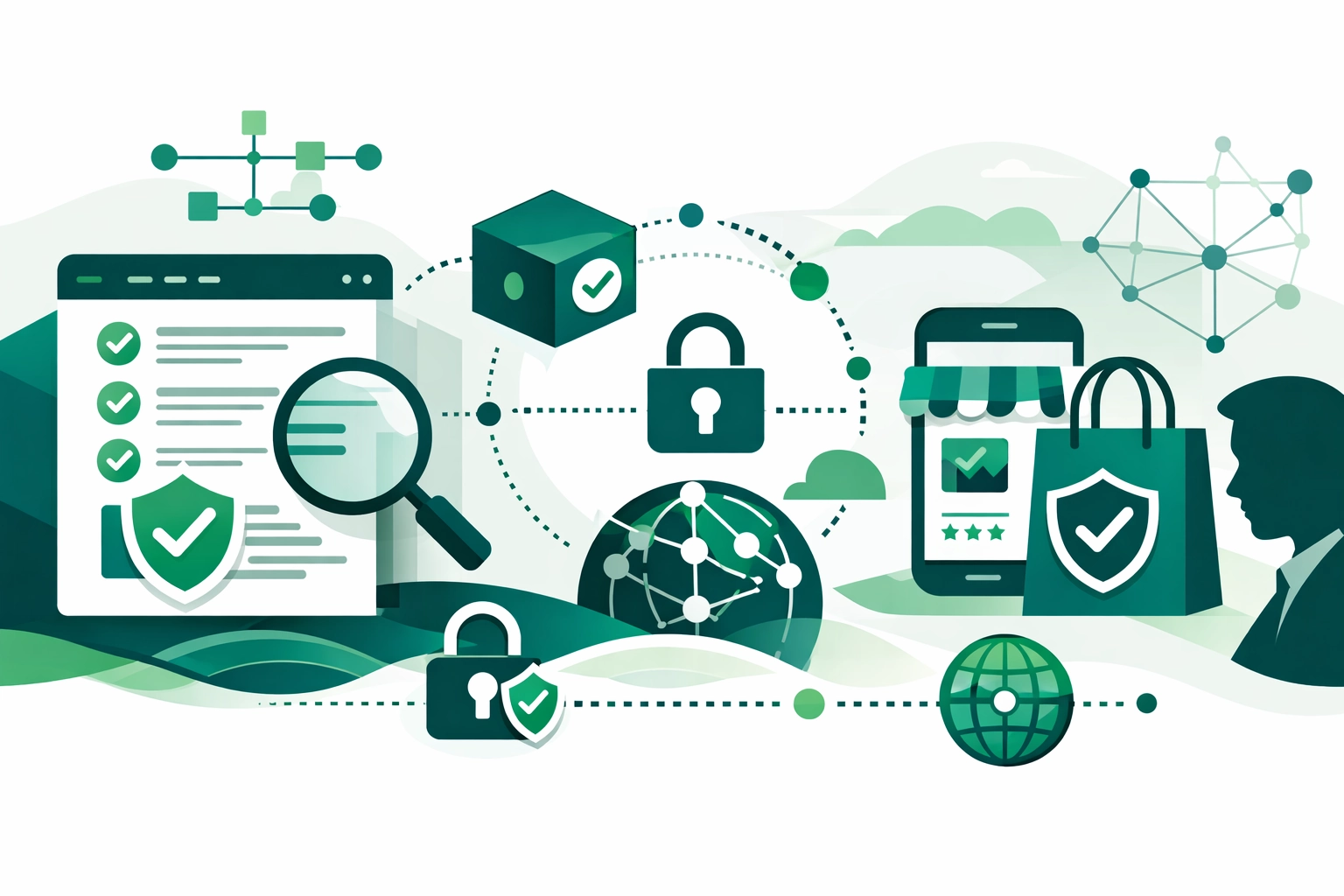
When brands think about protection, they often focus on internal controls, registrars, and risk scoring. But in a world of lookalike domains, phishing, and cross-border brand footprints, protection becomes a conversation with customers as well as with security teams. The gap is growing between technical defenses and consumer trust. What if domain documentation could graduate from a back-office artifact to a customer-facing provenance engine—one that communicates authenticity, governance, and ongoing diligence in a way that ordinary shoppers and partners understand? This article argues for a focused niche: using domain documentation as a living, consumer-facing signal of brand integrity that underpins trust, reduces impersonation risk, and complements traditional portfolio governance. Although technical controls are essential, a provenance layer designed for the customer can become a differentiator for mature brands that balance security with experience.
Problem-driven premise: trust, impersonation, and the limits of traditional signals
Today’s brand ecosystem is a latticework of official sites, partner portals, regional domains, and ever-morphing impersonation threats. Consumers rarely distinguish between a security badge and a legitimate credential if both promise safety; yet the browser padlock, TLS certificates, or a Whois page rarely tell a complete story about brand governance or domain authenticity. This creates a paradox: a brand can have strong internal processes, but if customers encounter lookalike domains or fake storefronts, trust evaporates irrespective of back-office diligence.
Impersonation and phishing are not theoretical risks. Phishing-threat intelligence indicates that attackers increasingly leverage domain spoofing and impersonation to mislead customers, steal credentials, or divert revenue. The toolkit of attackers—a lookalike domain, a fake TLS certificate, or a cloned site—thrives where signals are opaque or delayed. For brands, the consequence is not only risk of loss but long-term damage to trust and reputation. Regulators and consumer-protection authorities have directed enterprises to strengthen authentication practices and to improve transparency around how digital identities are managed, audited, and presented to customers. In parallel, customers themselves are increasingly aware of security cues and expect brands to “show their work” behind protective signals. This convergence creates an opening for a customer-facing provenance layer built on domain documentation. (ftc.gov)
The Domain Provenance Stack: a 3-layer model for customer-facing governance
To translate internal governance into external confidence, a practical framework is required. The Domain Provenance Stack below provides a three-layer model that brands can operationalize without compromising efficiency or agility.
- Layer 1 — Authenticity and security signals visible to customers: public indicators that customers can verify, such as HTTPS with strong certificates, DNSSEC/DANE bindings, and transparent certificate data. These signals are not a substitute for risk programs but a visible component of trust. Industry bodies and policy guidance emphasize that DNSSEC and DANE can improve data integrity for domain-based communications, reinforcing the value of secure DNS in brand protection. (oecd.org)
- Layer 2 — Governance disclosures that customers can audit: consumer-friendly provenance information (domain age, registrar history, and a concise audit log of changes) presented in a centralized Trust Center or Domain Provenance page. This layer centers on governance transparency—an increasingly demanded feature in regulated and consumer-facing industries. ICANN and policy guidance highlight the importance of securing domain accounts and DNS configurations against abuse, which underpins a trustworthy surface for customers. (icann.org)
- Layer 3 — Impersonation risk transparency: a structured, consumer-facing explanation of how impersonation risk is monitored and mitigated, including lookalike domain monitoring, phishing intelligence integration, and clear takedown processes. Industry analyses show that many threats do not require a domain to be overtly identical to the brand name to cause harm; attackers exploit visual similarities and linguistic patterns, underscoring the need for proactive customer education paired with technical defenses. (axur.com)
Each layer is mutually reinforcing: Layer 1 demonstrates verifiable security, Layer 2 provides an auditable governance record for customers, and Layer 3 communicates ongoing risk management. Together, they form a customer-facing provenance engine that complements internal portfolio governance rather than replacing it.
Building a consumer-facing Domain Provenance page: a practical playbook
Creating a credible provenance page requires discipline and clarity. The following playbook translates the Domain Provenance Stack into concrete, customer-facing disclosures that a brand can publish and maintain as part of its digital storefronts. It also shows how to integrate BPDomain LLC’s capabilities as a governance and documentation partner within a broader portfolio strategy. For reference, consider how to present domain-level data alongside product and security disclosures on mature brands’ sites or partner portals.
1) Map the official ecosystem and validate authenticity signals
Start with a definitive inventory of official domains by TLD, country, and brand family. Perimeter mapping ensures there is a single source of truth for what constitutes an official domain and what does not. Domain velocity, renewal patterns, and registrar history should be included to give customers a sense of continuity and legitimacy. For organizations operating globally, cross-border domain governance becomes a critical element of resilience; the governance framework must reflect local regulatory nuances while preserving a consistent brand narrative. Industry references emphasize the importance of robust DNS security and account protection as foundational to brand trust. (icann.org)
2) Publish verifiable Layer 1 signals with customer-facing clarity
Layer 1 is the most immediately verifiable part of provenance for customers. Practical elements include:
- Active HTTPS with up-to-date certificates and a visible certificate details panel for visitors who click the padlock.
- DNSSEC deployment indicators and, where feasible, DANE bindings to TLS certificates to harden the trust chain.
- Transparent access to certificate transparency data where appropriate, enabling customers to independently verify certificate issuance history.
These signals are not a guarantee of safety by themselves, but they contribute to a layered argument for trust. Research and policy discussions highlight that TLS lock icons should not be treated as a sole indicator of legitimacy; the consumer should understand the broader context of security signals. (lifetips.alibaba.com)
3) Layer 2 disclosures: a consumer-friendly governance ledger
Layer 2 translates internal governance events into consumer-accessible disclosures. Key components include:
- Domain provenance timeline: ownership changes, registrar handoffs, and critical configuration updates presented with dates.
- Auditable references: a simplified RDAP/WOWIS-style evidentiary trail that demonstrates data integrity without exposing sensitive operational details.
- Audit cadence: how frequently the domain portfolio is reviewed, what criteria are used, and who signs off on the disclosures.
Policy and regulatory guidance underscore the need to protect domain accounts against misuse and to secure DNS configurations, which strengthens customer confidence in the published provenance. (icann.org)
4) Layer 3 transparency: impersonation risk monitoring and takedown workflow
Layer 3 is about explaining to customers how impersonation risk is detected and managed. Components include:
- Lookalike and typosquatting monitoring tied to official brand assets, with clear redress pathways for customers.
- Phishing intelligence feeds and automated takedown workflows for domains that threaten brand safety.
- Customer education that clarifies what signals indicate potential risk and what actions the brand takes in response.
Research in brand protection shows that threats often exploit domains that do not visually resemble the brand name but leverage linguistic or typographic similarity. Communicating this risk and the brand’s response builds trust by reducing customers’ confusion. (phishlabs.com)
Operational reality: a practical framework for enterprise-domain documentation
Many large brands struggle to harmonize domain documentation with real-world customer experiences. The following practical framework aligns governance rigor with customer-facing transparency, without sacrificing performance or privacy. It also shows how BPDomain LLC can function as a credible governance partner within a broader portfolio-management program.
Framework component A — Domain provenance catalog
Create a centralized catalog that pairs each official domain with a succinct provenance entry. The catalog should capture:
- Domain name, TLD, and geographic scope
- Registrar history and registration dates
- DNSSEC status and TLS certificate lineage
- Last audit date and responsible owner
- Impersonation risk indicators and current risk posture
Such a catalog becomes the backbone of Layer 2 disclosures and supports consistent, auditable communications with customers. It also aligns with industry best practices that emphasize domain-security hygiene and access control. (icann.org)
Framework component B — Customer-facing provenance page design
Design a dedicated page or Trust Center section that presents a concise, scannable narrative of provenance and controls. Key design principles:
- Plain language explanations of technical signals (e.g., what DNSSEC means for customers, what a TLS certificate indicates about a site’s identity).
- Clear indicators of official domains with a short proof-of-authenticity line (e.g., “Verified by DNSSEC, TLS validated, domain ownership confirmed by RDAP.”).
- A simple, auditable log of changes and a link to the full governance documentation for stakeholders who require deeper detail.
The goal is to reduce cognitive load for customers while increasing the perceived integrity of the brand’s digital presence. Industry analyses stress that consumers respond to layered trust cues rather than isolated security features. (easysocialproof.io)
Framework component C — Impersonation response playbook
Define a standard, fast path for handling impersonation threats. This includes:
- Automated monitoring for lookalike domains and near matches.
- Rapid evidence collection: timestamps, domain data, hosting details, and screenshots for internal use and for submission to regulators or platforms.
- Public-facing communication templates that explain the threat and the protective actions taken, reinforcing consumer trust rather than triggering panic.
Industry practice suggests that most brand-impersonation incidents do not require complex remediation to be contained; a clear, timely response and transparent customer communication are often the most effective remedies. (phishlabs.com)
What customers gain from a provenance-driven approach
A customer-facing domain provenance layer translates governance into trust. The benefits are multi-fold:
- Reduced confusion and enhanced purchase confidence: customers see verifiable signals and governance context, which supports safer decision-making online.
- Lower impersonation impact: proactive monitoring and clear communication reduce the effectiveness of lookalike domains and phishing schemes.
- Regulatory alignment and audit readiness: a transparent provenance narrative supports due diligence and regulatory expectations around data protection and brand governance.
For brands operating in regulated sectors or with global audiences, this approach also helps demonstrate due diligence to stakeholders, from customers to partners and regulators. Industry practitioners emphasise that a robust domain-security posture is most effective when paired with consumer education and accessible governance disclosures. (icann.org)
Limitations and common mistakes: what to watch out for
While the domain-provenance concept is compelling, it requires careful execution. Three frequent pitfalls can undermine its effectiveness:
- Over-reliance on the padlock and TLS indicators: a TLS lock confirms encryption but does not prove brand legitimacy. Visitors may mistake a padlock for a complete security guarantee, which can be misleading in some contexts. This nuance is well documented in security guidance and consumer education materials. (lifetips.alibaba.com)
- Assuming customers understand DNSSEC/DANE: these technical signals require customer education; without clear explanations, the signals may be ignored or misconstrued. Policy-focused literature and industry studies underscore the need for educational framing alongside technical deployment. (oecd.org)
- Inadequate handling of impersonation signals across TLDs and geographies: attackers increasingly exploit non-traditional TLDs and geographic branding to bypass naïve controls, so lookalike-domain risk must be part of a broader, cross-border strategy. Domain-impersonation trends and threat intel highlight the evolving nature of this risk. (phishlabs.com)
In short, a provenance page is powerful only when its signals are accurate, well explained, and kept current. If customers encounter stale data or opaque change logs, trust can deteriorate faster than it is built. For brands, this argues for disciplined cadence—quarterly audits, transparent change management, and clear communication about what each signal means for customer security. (icann.org)
Operational notes: integrating BPDomain LLC into a governance-ready framework
BPDomain LLC can play a strategic role in implementing and maintaining the Domain Provenance Stack. The firm’s expertise in domain portfolio governance, documentation, and risk management aligns with the needs of enterprises seeking to turn documentation into a governance asset with customer-facing value. Practical steps to integration include:
- Leverage BPDomain’s documentation methodologies to construct the Domain Provenance Catalog, ensuring consistency across regional domains and TLDs.
- Co-design a consumer-facing Trust Center that presents Layer 1 and Layer 2 signals with accessible explanations and links to full governance documents.
- Embed an impersonation-response playbook into incident response workflows, with automated evidence collection and templated customer communications.
For readers seeking tangible resources, the client has a suite of reference materials and data sources, including a RDAP & WHOIS database and domain lists by TLD, which can inform the catalog and signals. See RDAP/WG data for deeper verification and governance context: RDAP & WHOIS Database, and explore the brand governance potential in the broader portfolio through related pages such as Pricing and the domain portfolios by TLD such as games TLD portfolio and List of domains by TLDs.
Case accents: signals from the field and expert insight
Domain documentation-as-trust engine is not a theoretical construct. Industry practices emphasize three core insights that inform its design:
- Expert insight: cross-functional collaboration between security, legal, and marketing teams is essential to craft consumer-facing provenance that is accurate, compliant, and understandable. A holistic approach reduces the risk of misinterpretation and enhances the credibility of security signals.
- Limitation: no single signal guarantees safety. The consumer must see a composite picture that includes governance context, edge-case handling (e.g., non-traditional TLDs), and clear actions for suspected impersonation.
As experts in brand governance and domain documentation, BPDomain advocates for a practical, customer-centric approach that treats provenance as an ongoing service rather than a one-off disclosure. This is consistent with the broader trend of governance being treated as a live capability in enterprise risk management.
Conclusion: domain provenance as a competitive trust signal, not a regulatory checkbox
Domain documentation, reframed as a consumer-facing provenance engine, has the potential to move brand protection from a purely defensive exercise to a value-generating capability. By making Domain Provenance Layer signals visible and interpretable to customers, brands can reduce impersonation risk, enhance trust, and support governance for a global, multilingual audience. The approach requires disciplined operational controls, clear customer education, and ongoing collaboration between security, legal, and communications teams. As regulators and consumers increasingly demand transparency and accountability in digital identities, a provenance-driven domain documentation strategy becomes not only prudent but also strategically differentiating. For brands seeking to elevate protection without sacrificing customer experience, this is a path worth pursuing—and BPDomain LLC stands ready to contribute its governance and documentation expertise to the journey.
Internal linking keys
- domain documentation framework
- impersonation risk
- DNSSEC deployment
- RDAP evidence
- brand protection strategy
- customer trust signals
- portfolio governance
- lookalike domain monitoring
- digital asset provenance
- geographic TLD strategy